Are Luggage Lockers Safe In Paris?
An honest look at how safe luggage lockers and bag storage points in Paris really are: the Radical Storage guarantee terms, SNCF locker reality, claim caps and deadlines, and what you should do before handing over a bag.
Are Luggage Lockers Safe In Paris?
Yes, in the practical sense: bags left in Paris lockers and at staffed storage points are rarely lost, and the operators publish real security procedures. But "safe" has a legal limit most travellers never read. The Radical Storage guarantee is capped at EUR 3,000 per claim, is not insurance, and dies if you miss a seven-day reporting window. Physical safety and financial safety are two different questions.
The honest answer starts with a distinction nobody makes at a station concourse. The chance that your suitcase disappears from a Paris storage point is low, and the operators' own published material, not marketing, supports that. The chance that you would be fully compensated if it did disappear is much lower than most people assume, because the guarantee that gets advertised as EUR 10,000 is capped at EUR 3,000 per claim in the binding terms, and it comes with deadlines, exclusions and an itemised-list requirement that catch out almost everyone who has not read them.
So this article answers three questions in order. How physically safe are the lockers and storage points in Paris, from the SNCF station consignes to the Radical Storage network of shops and hotels. What the terms of service actually promise, in the operator's own words, including the parts that limit a claim. And what you should do in the ten minutes before you hand a bag over, because that is where almost all of your real protection is created.
One framing note before anything else. In Paris, "luggage lockers" usually means one of two very different things: the automated steel lockers inside SNCF stations, or a staffed bag drop at a shop, hotel or café that belongs to a booking network. They are not equally safe in the same ways, and they fail in different ways, so they are treated separately below. A good starting point for either is a storage point you can cancel for free before you arrive.
What Physically Happens To A Bag Once You Hand It Over
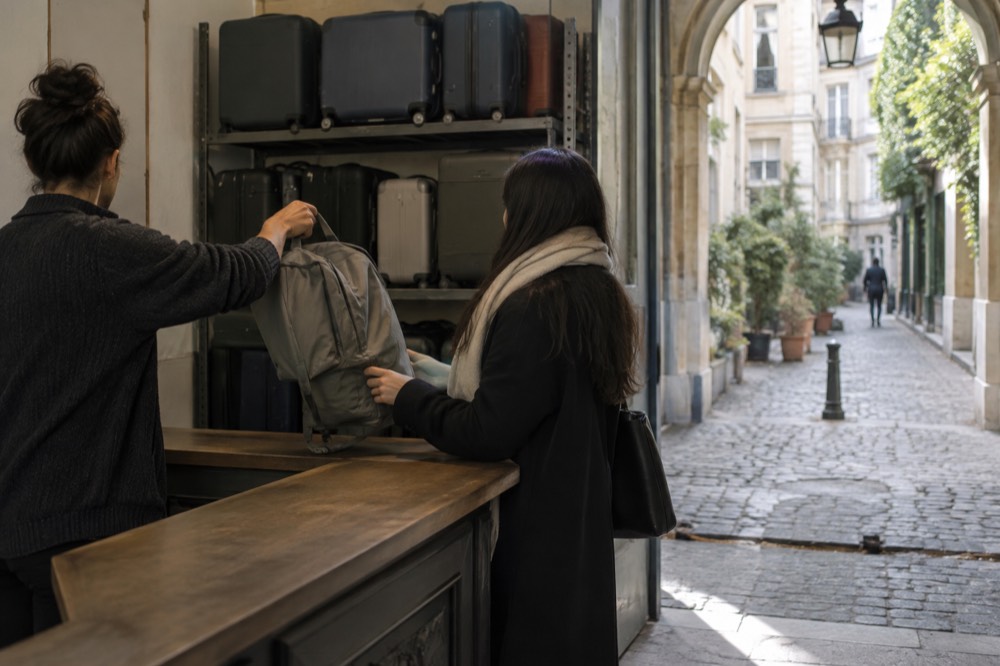
At a Radical Storage point, a shop or hotel employee takes the bag behind a counter, tags it and keeps it in a back room or locked area until you return. At the airport desks, the bag is identity-checked, X-rayed, scanned and then stored. At an SNCF locker, nobody touches it at all: you lock it in a steel box and keep the process entirely to yourself. Three different security models, and each has a different weak point.
The airport procedure is the most documented, because the operator publishes it in full. Bags left at the Bagages du Monde desks at Charles de Gaulle and Orly are checked in only after an identity check that accepts a national ID card or a passport only, then X-rayed, then scanned and stored. A driving licence will not get your bag accepted, which is a detail worth knowing before you queue. The X-ray step also means the desk knows what is in the bag, which cuts both ways: it is a genuine security control, and it is also how the operator enforces its prohibited-items list, which covers hazardous, flammable, explosive or toxic products, weapons and ammunition, perishable goods, live animals, narcotics, counterfeit goods and radioactive or chemical items. Discovering a prohibited item means refusal of service with no refund.
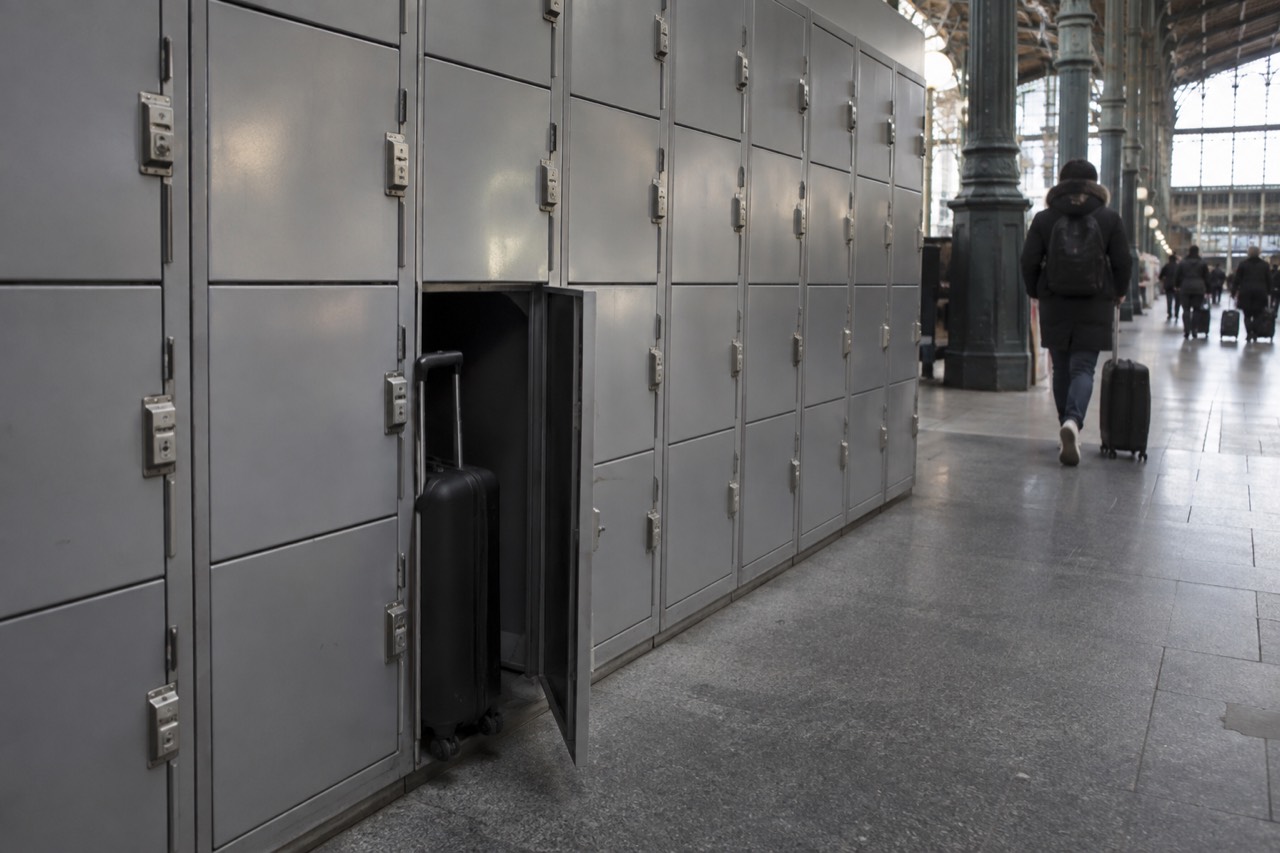
The SNCF station lockers are the opposite model. Nobody screens anything. You put the bag in the locker, you pay, you take the code or receipt, and the bag sits in a steel box in a monitored station area until you come back. The safety here is structural: the box is locked, the locker hall sits inside a station with its own security posture, and no member of staff ever opens your locker. The risk is different in kind. If you lose the receipt or forget the code, or if the locker bank is full or closed for works, you have no staffed fallback inside the station, and SNCF says plainly on its own pages that its consignes "rencontrent un fort succes et peuvent ponctuellement etre completes" and may be temporarily closed for works, with an off-site partner as the alternative.
The Radical Storage model sits between the two. A real person at a real business takes custody of your bag, tags it, and gives it back against your booking. The network's Paris points are ordinary businesses, hotels among them, and their hours are ordinary business hours, so the safety of the arrangement depends partly on the specific point you choose. This is also why the guarantee exists at all, and why its terms, not its headline, are what actually answer the safety question. That is the next section.
There is one more physical-safety fact that belongs here, and it comes from SNCF itself: the operator publishes that it takes an average of 19 minutes to deal with an unattended bag, that 360 items are left behind on trains and in stations every week, and that unattended luggage delayed or cancelled 35,500 trains in 2022. A bag that is checked into a locker or a staffed point is, by definition, not an unattended bag, which is the quietest safety argument for using one.
What The Radical Storage Guarantee Actually Covers
The guarantee is advertised at EUR 10,000, but the binding terms cap payment at EUR 3,000 per claim, state that it is not a contract of insurance, and value items at current market value minus wear and tear, with sentimental value explicitly irrelevant. Claims must be reported within seven days, and theft claims additionally require a police report within 48 hours. Those sentences are the whole financial safety story, and they come from the operator's own terms.
Start with the cap, because it is the number that matters if you are deciding whether to leave a laptop in the bag. Radical Storage's marketing material says EUR 10,000. Clause 9.4 of the terms says the company will pay up to a maximum of EUR 3,000 per claim. Both figures are real; only one of them is the contract. Clause 9.2.2 goes further and states that the guarantee "is not an offer to insure your property and does not constitute a contract of insurance", which is why this site never calls it insurance. If your bag and its contents are worth more than EUR 3,000, the excess is your risk, full stop.
Then the deadlines, which are stricter than most people expect. Under clause 9.5 you must notify the company within seven days of discovering the loss or damage, or the guarantee is invalidated. The company then responds within three working days with one of three verdicts: claim invalid, claim pending, or claim eligible. If your claim is ruled eligible, you have ten days from receiving that response to follow the steps in clause 9.6. And for theft or criminal damage there is a second, tighter clock: the incident must be reported to the police within 48 hours of you becoming aware of it, and in any event within seven days of the end of the booking period, or the claim is excluded.
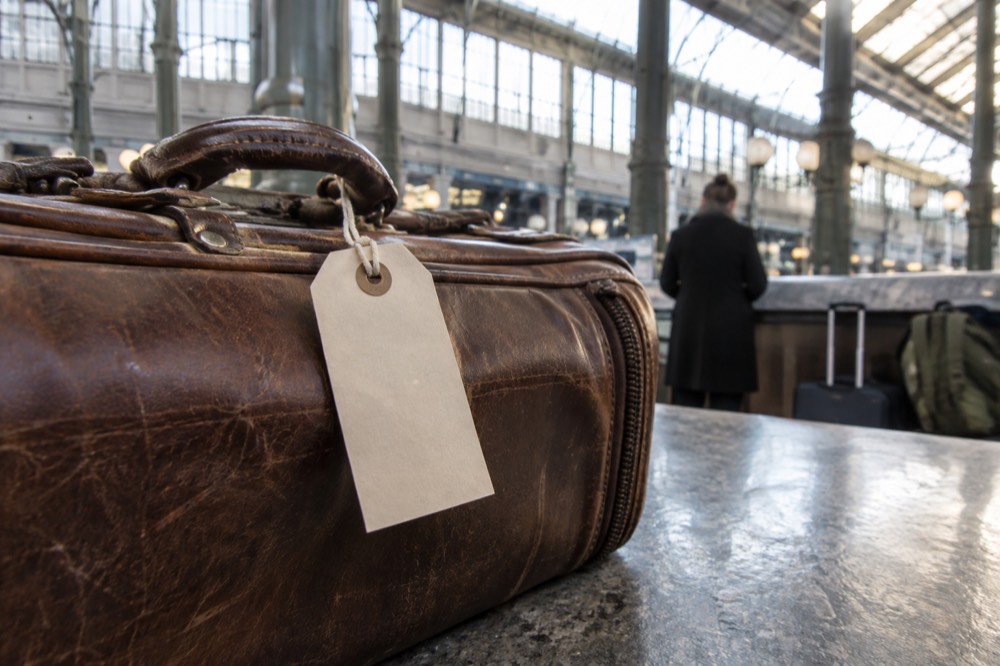
The single most actionable exclusion is clause 9.8.1, which excludes any booking for which the company has not received a list of items, signed by the claimant, in which all items are individually listed along with their estimated value. In plain terms: if you have not itemised what was in the bag, with values, before or at the moment of a claim, there is no claim. This is why the practical advice later in this article is to photograph the bag's contents and write down values before you hand it over. It takes five minutes and it is the difference between an eligible claim and an excluded one.
The valuation basis matters too. Items are valued at their current market value minus wear and tear, and the terms state that sentimental value is not relevant to valuation. A three-year-old suitcase is compensated as a three-year-old suitcase, not as the price you paid. Other exclusions are what you would expect: items over the clause 9.4 limit, anything not reported per the deadlines, items damaged in transit to or within the storage space, and items not packed reasonably safely and securely.
For a fuller walkthrough of how a booking works in practice, see the guide on how Radical Storage works in Paris, and for the wider question of physical security at drop-off points, the guide on whether Paris bag storage is safe covers it in more depth than this article can.
How Safe Are The SNCF Station Lockers?
Physically, the SNCF consignes are among the safest options in Paris: steel lockers inside monitored station halls, opened by nobody but you, in stations that X-ray and patrol their own premises. Financially, they are the weakest option, because SNCF publishes no guarantee, no per-claim cap and no compensation scheme for locker contents at all. The steel is real; the protection is not.
The tariff and mechanics are straightforward. At Gare de Lyon, Gare de l'Est and Gare d'Austerlitz the lockers run EUR 5.50 small, EUR 7.50 medium and EUR 9.50 large for a fixed 24 hours, then EUR 5 per parcel per further 24 hours. Gare du Nord runs a staffed service with duration pricing instead: EUR 4 up to four hours, EUR 7.50 for four to twelve hours, EUR 9.50 for twelve to twenty-four hours, open 06:15 to 23:15 daily. Payment methods differ station by station, which is its own small safety issue: Gare de l'Est takes coins only, Gare de Lyon's page still describes cash payment while announcing a refit to card-only lockers, and Montparnasse is card only. Arriving with the wrong payment method at 21:00 with a train at 22:00 is a genuine failure mode. More of these guides are collected on Luggage Storage in Paris.
The honest limitation is capacity. SNCF's own pages state that the lockers are sometimes fully booked and may be temporarily closed for works, and the only published fallback is an off-site partner within a five-minute walk. There is no published guarantee figure for locker contents, no claim process and no itemised-list scheme. If a locker is broken into, which is rare, your recourse is ordinary French law and travel insurance, not an operator scheme. That is the trade: maximum physical security, minimum financial protection.
It is also worth knowing what French law now says about bags left unattended in stations, because it frames why the lockers and staffed points exist at all. The law of 28 April 2025 on transport security created three tiers of fixed penalty for abandoned baggage across SNCF and RATP networks: EUR 72 rising to EUR 450 for involuntary abandonment, EUR 150 rising to EUR 750 where the bag carries no label, and EUR 180 rising to EUR 1,500 for manifest voluntary abandonment. Labelling is compulsory in SNCF stations, and a free anonymous QR-code label is available in stations after a joint SNCF and RATP trial. A checked-in bag is not an abandoned bag; a bag left "just for an hour" next to a pillar is, now with a price tag.
Is Luggage Storage At Shops And Hotels Safe?
Broadly yes, and in a different way than lockers: a staffed point means a named person takes custody, tags the bag and hands it back against your booking, and the network behind it carries a guarantee with a published claim process. The weak points are the point's own opening hours and the fact that the person at the counter is an ordinary employee of an ordinary business, not a security professional. Choose the point for its hours and its reviews, not only its price.
The Paris rate across the Radical Storage network is EUR 3.90 per bag per day at the overwhelming majority of points, plus a EUR 1.99 per-bag fee that appears at checkout, so one bag for one day is EUR 5.89 as arithmetic on those two published figures. The network's Paris points include hotels, shops, restaurants and local companies, and their hours are ordinary business hours, published per point. That matters for safety in a very concrete way: a point that closes at 20:00 cannot give your bag back at 21:30, and a bag held overnight at a closed shop is a different arrangement from a bag held during opening hours. Check the specific point's hours before booking, not the area's.
Reviews are the second safety signal, and the network publishes them per point. The Gare du Nord cluster, for instance, carries a 4.75 rating across 2,937 reviews over its published points, and the points around the Louvre carry 4.8 across 3,152. Those are real, checkable signals about how each drop-off actually treats people's bags, and they are more useful than any blanket claim about the network as a whole.
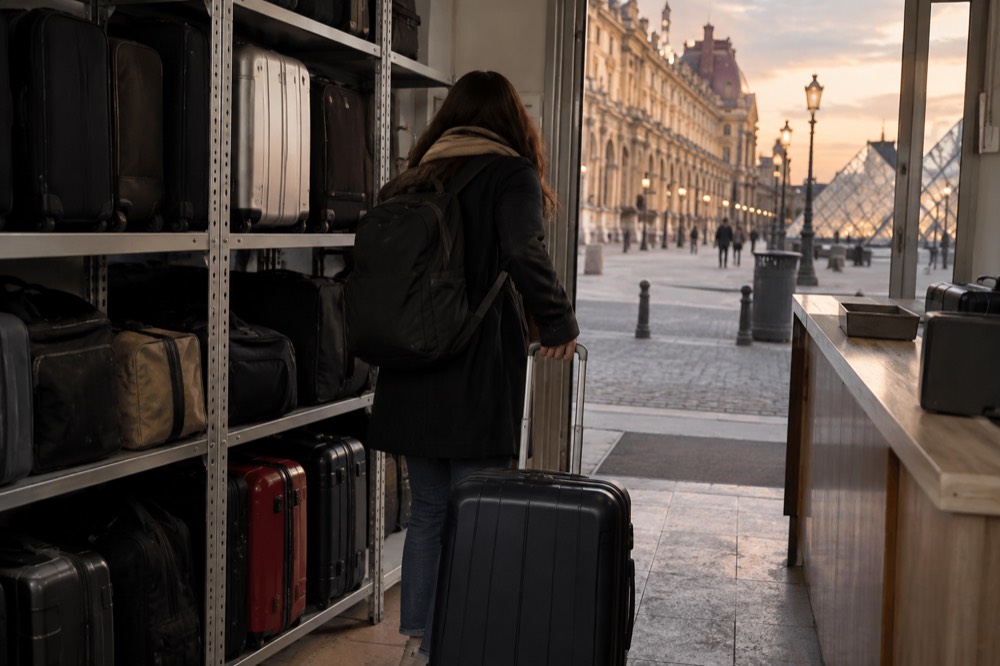
One honest comparison point: venues' own facilities are not automatically safer. The Louvre's free self-service lockers beneath the Pyramid come with the museum's explicit statement that it shall not be held responsible for any items of value placed in them, and items must be collected the same day. Disneyland Paris's own rules state that it cannot be held liable for theft, loss or damage of personal belongings inside the parks. A booked storage point with a guarantee and a claim process is, on paper at least, a stronger financial position than a free locker with a disclaimer, even though the free locker costs nothing.
What Can Actually Go Wrong, And How Often
The documented risks are three: a bag is refused or turned away (wrong ID at the airport, prohibited items, a full locker bank), a bag is inaccessible when you need it (the point closes before your train), or a bag is lost or damaged and you enter the claims process. Published incident statistics for Paris storage points do not exist, so nobody can honestly quote a theft rate, and this site will not invent one.
What can be said, from primary sources only, is this. SNCF's own figures on unattended bags, 360 items left behind per week and a 19-minute average response, describe the network at large, not storage points. No Paris storage operator publishes theft or loss statistics for its own points, and no prefecture or ministry figure for storage-point theft could be sourced, so any percentage you read on a blog is invented. What you can verify is the procedural side: the airport desks X-ray every bag, the station lockers are self-secured, and the network points operate under the guarantee terms summarised above.
The refusal risks are the ones travellers actually hit. At the airport desks, a driving licence instead of a passport or national ID card means no bag accepted. At the SNCF lockers, a full bank or a works closure means no locker, with the off-site partner as the fallback. At a network point, arriving outside the point's published hours means a closed door. None of these are safety failures in the loss sense, but all of them strand a traveller with a bag, which is the emergency the reader is usually trying to avoid.
The claims process, if it ever comes to that, is fully documented and worth having in one place:
| Step | Deadline | What happens |
|---|---|---|
| Report loss or damage to Radical Storage | Within 7 days of discovery | Notification by email; missing it invalidates the guarantee |
| Theft or criminal damage | Police report within 48 hours of awareness | Also within 7 days of the booking period ending at the latest |
| Company response | Within 3 working days | Verdict: invalid, pending, or eligible |
| If eligible, follow clause 9.6 steps | 10 days from the response | Supply the signed itemised list of contents with values |
| Payment | Capped per claim | EUR 3,000 maximum; market value minus wear and tear |
Read that table once before you travel and you already know more than almost anyone who books storage in Paris. The itemised-list requirement in the last row is the one that decides most real claims, because it is the step almost nobody has done in advance.
How To Make Your Own Storage Booking Safer
Do five things before you hand the bag over: photograph the contents and note values, keep valuables and documents on your person, match the point's hours to your return time, keep the booking confirmation on your phone, and if anything is stolen get a police report within 48 hours. Each one maps directly to a clause or a failure mode documented above. None of them cost anything.
The itemised list is the highest-value habit. Clause 9.8.1 excludes claims where the company has not received a signed list of items individually listed with estimated values. Photographing the open suitcase and writing a short list with values, timestamped before drop-off, gives you exactly that evidence. It also deters the honest-but-casual handling that causes most minor damage, because the counter staff can see the bag was documented.
The second habit is selective: the guarantee caps at EUR 3,000 per claim and values items at market value minus wear, so a laptop, passport, cash or jewellery belongs in a day bag on your person, not in the stored suitcase. This is the same advice the venues give about their own free lockers, and it is the advice the terms effectively give too, by capping what they will pay.
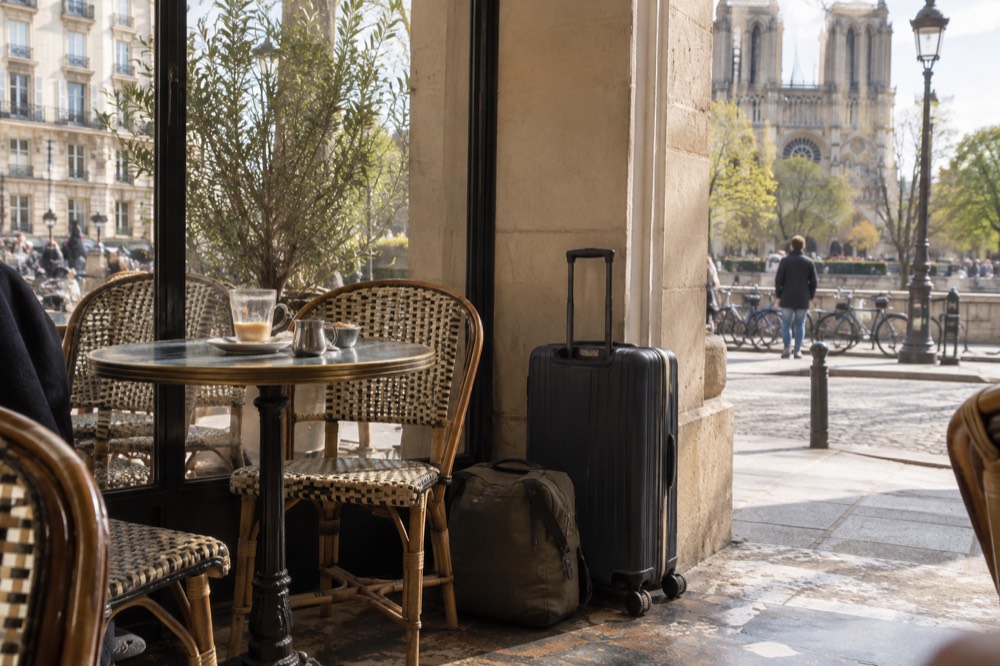
Third, match hours to your plan. Storage points in Paris are not open around the clock, whatever a page title says; the published hours are per point, and the honest way to use them is to book a point whose closing time sits comfortably after your intended pickup. If your train leaves at 21:00, a point closing at 20:00 is not a safe booking even if it is the cheapest or nearest.
Fourth, cancellation is free at Radical Storage any time before the scheduled check-in, so a plan change does not have to become a stranded booking. And fifth, if the worst happens, the clocks start immediately: seven days to notify, 48 hours for a police report on theft, ten days to complete the steps after an eligible verdict. Knowing the clocks in advance is the difference between a paid claim and an excluded one.
For readers weighing the lockers against a staffed drop on price as well as safety, the comparison is worked through in what luggage storage costs in Paris, and the station-by-station picture is in the guide to Paris train station luggage storage.
The short version of all of this: Paris lockers and storage points are physically safe in the ordinary, boring way that most supervised places are. The real safety work is financial, it is done in five minutes before you drop the bag, and it consists of a photographed contents list, valuables kept on you, and a memory of two deadlines. Do that, and the question stops being a worry and becomes a routine.
Common Questions About Luggage Locker Safety In Paris
Are Luggage Lockers Safe In Paris?
Physically, yes: SNCF lockers are steel boxes in monitored station halls that no staff member opens, and network storage points are staffed businesses that tag and hold bags behind a counter. Financially, safety is limited and conditional: the Radical Storage guarantee is capped at EUR 3,000 per claim, is not insurance, and requires notification within seven days plus an itemised list of contents. Do the five-minute preparation and the risk becomes small and bounded.
How safe are luggage lockers compared to staffed storage points?
Lockers offer stronger physical security, since nobody but you can open them, but weaker financial protection, since SNCF publishes no guarantee or claim scheme for locker contents. Staffed points offer a person taking custody, a tagging process and a guarantee with a documented claim procedure, but depend on the point's own opening hours. Neither is unsafe; they are safe in different ways.
Is luggage storage safe when the point is inside a shop or hotel?
Generally yes. The points are real businesses with published per-point hours and per-point reviews, and the network behind them provides the guarantee and claim process. The two real risks are hours-related, a point closed when you return, and value-related, contents above the EUR 3,000 per-claim cap. Check the specific point's hours and reviews before booking rather than relying on the area average.
What is the maximum the Radical Storage guarantee will pay?
EUR 3,000 per claim. The EUR 10,000 figure is the marketing headline; the binding terms, clause 9.4, cap payment at EUR 3,000 per claim, and clause 9.2.2 states the guarantee is not a contract of insurance. Items are valued at current market value minus wear and tear, and sentimental value is explicitly excluded from valuation.
What should I do before handing over a bag to protect myself?
Photograph the open bag and write a dated list of contents with estimated values, keep valuables, cash and documents on your person, confirm the point's closing time against your pickup time, keep the booking confirmation on your phone, and remember the deadlines: seven days to report loss or damage, 48 hours for a police report if something is stolen. The itemised list is the single step that decides most claims.
Can I be fined for leaving a bag unattended in a Paris station?
Yes. The French law of 28 April 2025 sets fixed penalties for abandoned baggage on SNCF and RATP networks: from EUR 72 for involuntary abandonment, from EUR 150 where the bag carries no label, and from EUR 180 for manifest voluntary abandonment, with higher amounts possible. Labelling is compulsory in SNCF stations and a free anonymous QR-code label is available in stations. A bag checked into a locker or staffed point is not an abandoned bag.