How Left Luggage Works In Paris: The Whole Process Explained
Left luggage in Paris means handing your bag to a staffed storage point for a fixed daily rate, then collecting it with a booking code. Here is the whole process, step by step, with the real prices and the catches.
Short answer
Left luggage in Paris works through staffed storage points in shops, hotels and cafés. You book a slot, drop the bag against a EUR 3.90 per bag per day rate plus a EUR 1.99 per-bag checkout fee, receive a collection code, and pick the bag up before the point closes. One bag for one day comes to EUR 5.89.
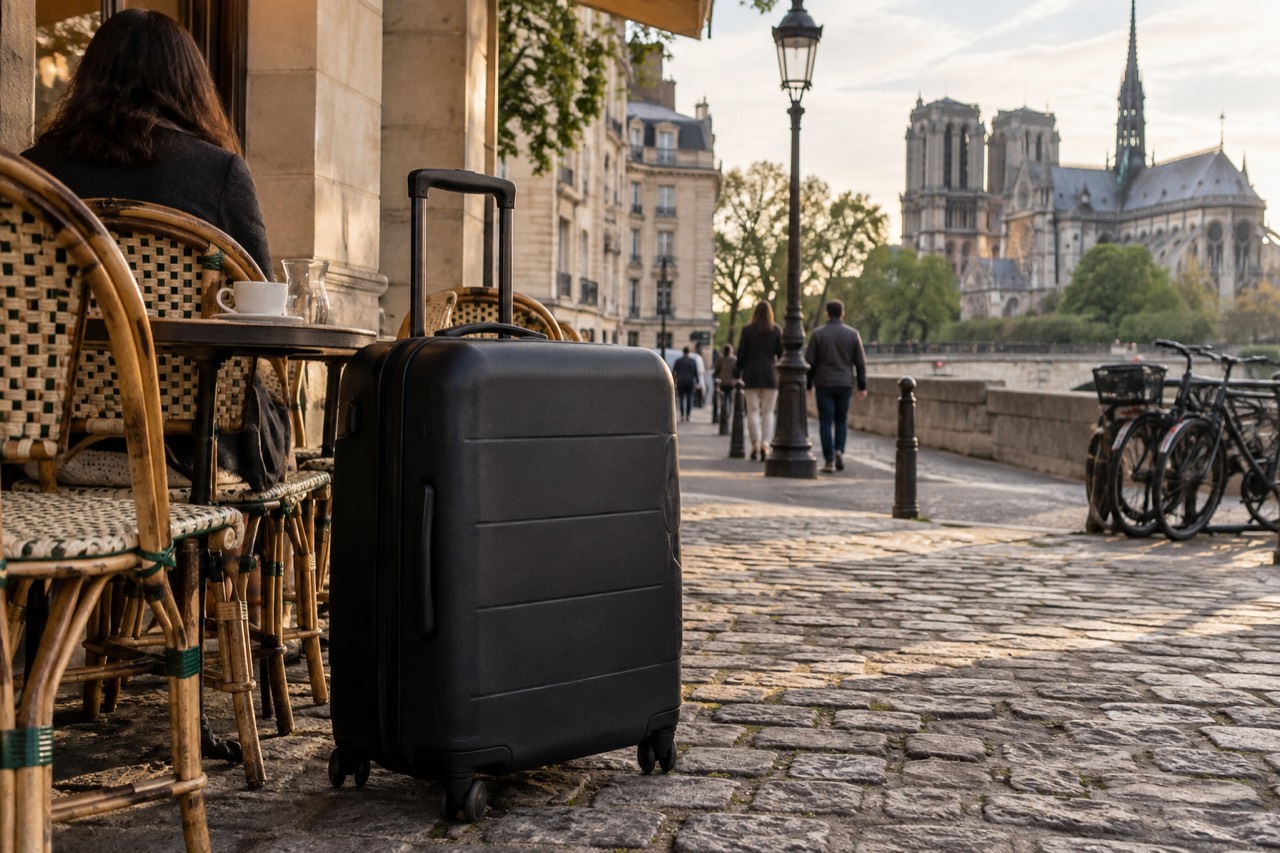
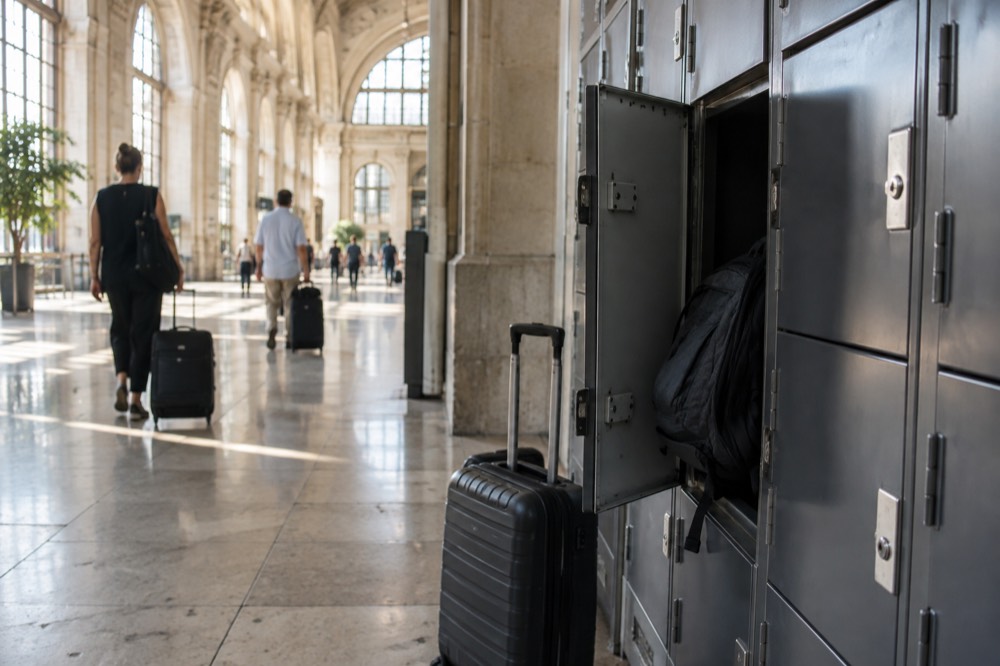
Left luggage in Paris is no longer a locker with a coin slot. The classic model still exists inside five mainline stations, but most of the city's capacity now sits behind the counters of ordinary businesses: a hotel near Gare de Lyon, a convenience store by the Rue de Rivoli, a café in Montmartre. You hand a stranger your suitcase and walk away, which sounds alarming until you understand the mechanics that make it routine. The seal, the photo, the collection code, the guarantee that is capped at EUR 3,000 per claim: these are the parts of the system a first-time user wants explained before the moment of handing over the bag.
This guide walks the whole process in order. What you book, what you pay, what happens at the counter, where the points are, what happens when something goes wrong, and what you cannot leave. Every price here comes from the operators' own published pages, and where a figure is arithmetic rather than an observed checkout, that is said plainly.
How Does Left Luggage Work In Paris?
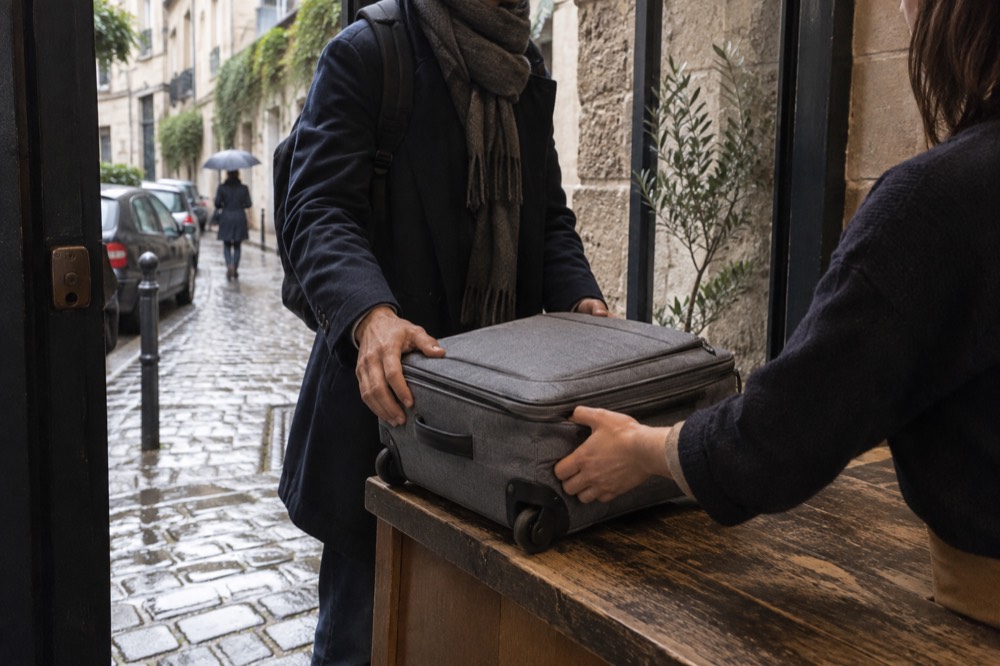
Left luggage in Paris works through a network of staffed storage points, mostly Radical Storage partner businesses, where you reserve a slot online, drop the bag during the point's opening hours, and collect it the same day or days later using your booking reference. The bag is tagged and sealed at drop-off, the staff member records it, and you pay a fixed rate per bag per day plus a one-off checkout fee.
The word "left luggage" is the British term; the French is "consigne" and you will see it on signs inside the stations. In practice a Paris bag drop in 2026 is one of three things: an automated locker inside an SNCF station, a staffed SNCF counter at Gare du Nord, or a network storage point in a shop or hotel. The first two are run by the railway, the third by booking platforms that partner with local businesses. Radical Storage is the network this site works with, and every point recommended here is a Radical Storage partner location; this site neither owns nor operates any of them.
The flow is the same everywhere in the network. You choose a location, pick a date and a number of bags, pay online, and receive a confirmation with a booking reference. At the point, the staff member checks the reference, tags your bag, and hands you nothing physical in most cases: your phone is your receipt. Collection reverses it. You show the same reference, the staff member fetches the bag, and you walk out.
What trips people up is not the process but the assumptions around it. Hours are the point's own hours, not the network's: a card that says a point opens at 07:30 means exactly that, and a 23:59 close is the latest among that area's points, not a promise about yours. The network's page titles say "24/7" in many cases, and that is a template string, not a fact about any real location. For the fuller mechanics of the platform itself, see the guide on how Radical Storage works in Paris.
What A Booking Actually Gives You
A booking gives you a reserved slot at one named location, a fixed price locked at EUR 3.90 per bag per day plus the EUR 1.99 per-bag checkout fee, free cancellation any time before your scheduled check-in, and the network's guarantee, which is capped at EUR 3,000 per claim and is explicitly not insurance. You are buying a date, an address and a capped guarantee, nothing more.
The reservation is per bag, per day, and the price does not change with size: the network publishes no size or weight restrictions, which is one of its genuine advantages over a station locker with fixed interior dimensions. One bag for one day is EUR 3.90 plus EUR 1.99, which is EUR 5.89, and that figure is arithmetic on the two published numbers rather than an observed checkout total. Three days with one bag is EUR 3.90 x 3 plus EUR 1.99, which is EUR 13.69, because the checkout fee is charged once per bag and does not scale with nights.
The guarantee deserves a careful read, because the marketing headline and the contract differ. Radical Storage advertises EUR 10,000, but clause 9.4 of its own terms caps payment at EUR 3,000 per claim, and clause 9.2.2 states the guarantee "is not an offer to insure your property and does not constitute a contract of insurance". A reader deciding whether to leave a laptop in the bag needs the cap, not the headline, so the two figures are only ever written together here. The terms also state that items are valued at their current market value minus wear and tear, and that sentimental value does not count. You can read the full wording on the network's terms page.
Cancellation is the part that removes the risk of booking ahead. It is free, any time before the scheduled check-in, with a full refund. That matters because the alternative, the station locker, cannot be reserved at all: SNCF's own pages state that its consignes "can occasionally be full" and may be temporarily closed for works, and the company itself directs customers to a partner within a five-minute walk when no locker is available.
What Happens At The Drop-Off Counter
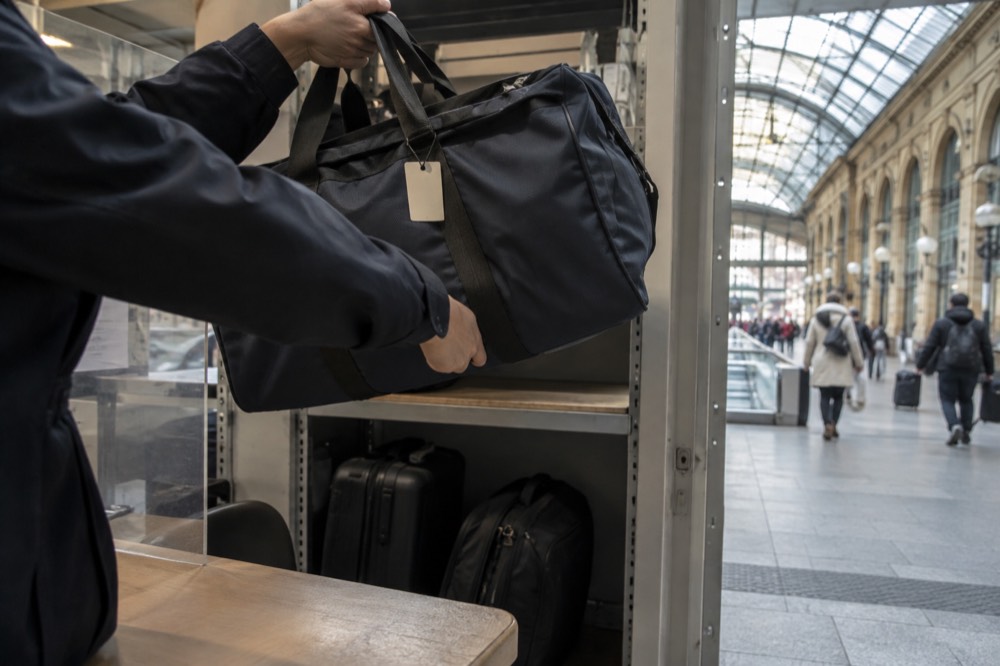
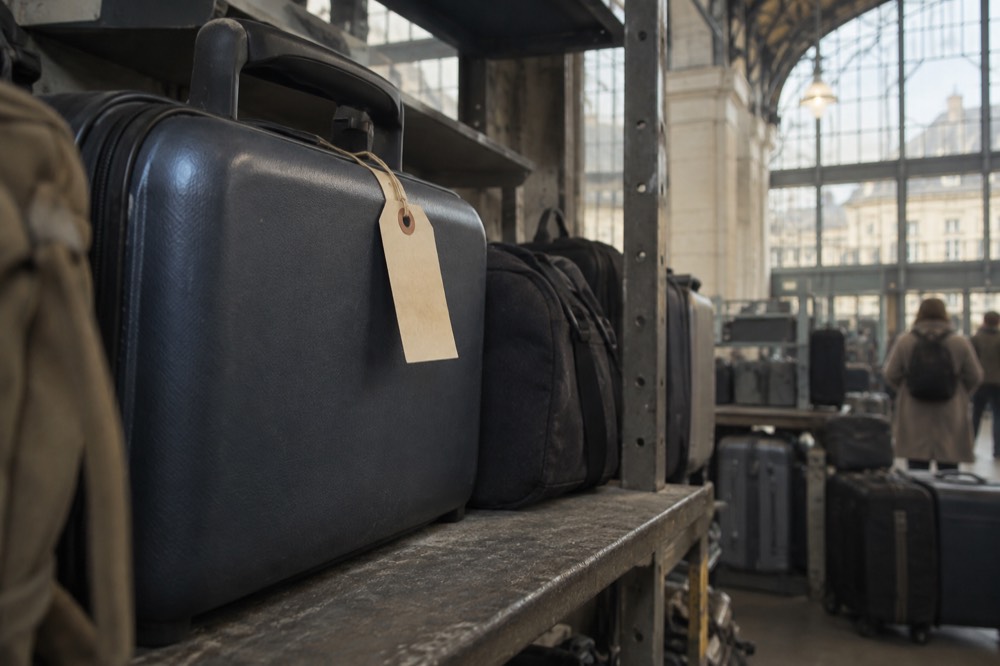
At the counter you show your booking reference, the staff member tags and records each bag, and in most cases a security seal is applied and its number noted on your booking. You take a photo of the sealed bag, keep the reference on your phone, and walk away. Collection reverses the exchange: same reference, same seal number, bag returned.
The counter is an ordinary business. There is no X-ray machine, no identity check and no queue system, which is the sharpest contrast with the airport left-luggage desk, where the operator Bagages du Monde accepts bags only after an identity check that takes a national ID card or a passport, and a driving licence will not do. A network point is faster and less bureaucratic, and it is also less screened, which is exactly why the seal and the photo matter.
Do two things before you hand the bag over. First, photograph the sealed bag with the tag visible. Second, and this is the step almost nobody takes, list the bag's contents with estimated values, because the network's terms exclude from the guarantee "any booking with respect to which the Company has not received a list of items signed by the party requesting such a claim in which all items are individually listed along with their estimated value". A two-minute photo of your packing list, sent to yourself, is the difference between an eligible claim and an excluded one.
Collection is the mirror image. Arrive inside the point's opening hours, show the reference, and check the seal is intact before you leave the counter. If the seal is broken or the bag is damaged, that is the moment to say so, because the claim clock starts at discovery: the terms give you seven days to notify the company of loss or damage, and a theft must be reported to the police within 48 hours of your becoming aware of it. Both deadlines are in clause 9.5 and the exclusions in clause 9.8, and they are strict.
How Much Left Luggage Costs In Paris
Left luggage in Paris costs EUR 3.90 per bag per day at a network storage point, plus a EUR 1.99 per-bag fee added at checkout, so one bag for one day is EUR 5.89. The SNCF station alternative runs EUR 5.50 to EUR 9.50 per fixed 24 hours by locker size, and the airport desk charges from EUR 10 per day for a carry-on bag.
The network's advertised "from EUR 1.90 a day" is a global marketing floor, not a Paris price: across 329 Paris location cards counted in research, 316 showed EUR 3.90, ten showed EUR 1.90, all in the Bercy cluster, and three showed EUR 5. A reader budgeting EUR 1.90 per bag is budgeting less than a third of what a one-day booking actually costs once the checkout fee lands.
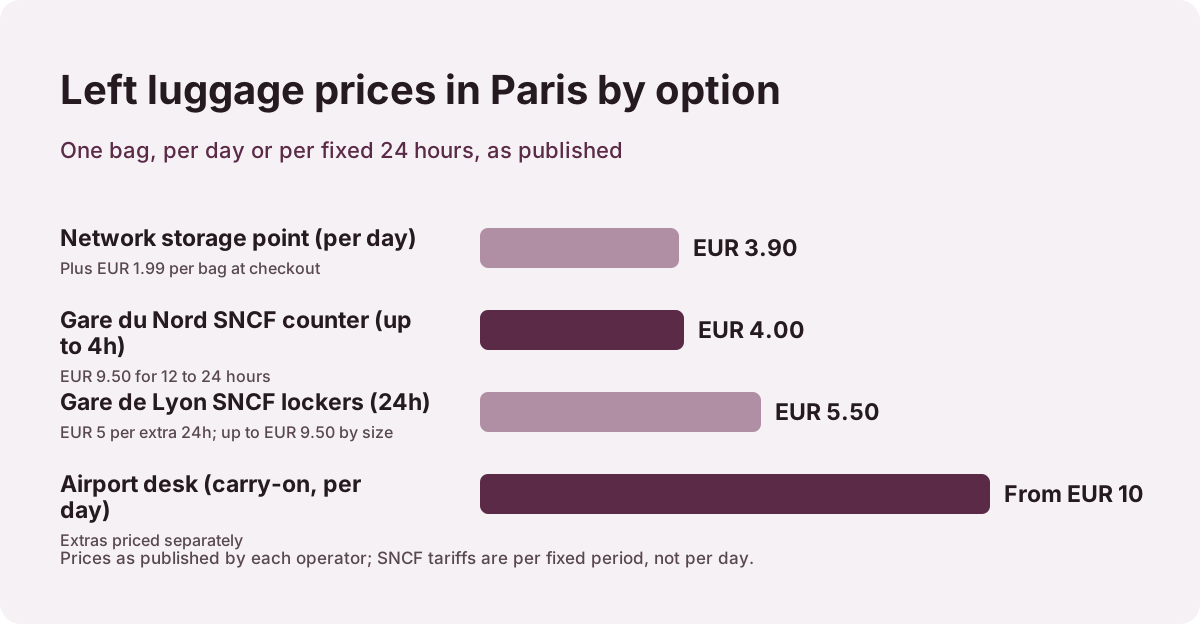
The honest comparison is against the official SNCF consigne, because it is the only alternative with fully published prices. At Gare du Nord the staffed counter charges EUR 4.00 for up to 4 hours, EUR 7.50 for 4 to 12 hours and EUR 9.50 for 12 to 24 hours, which makes it cheaper than the network for a short stop and more expensive for a long one. At Gare de Lyon the lockers charge EUR 5.50, EUR 7.50 or EUR 9.50 by size for a fixed 24 hours, then EUR 5 per further 24 hours, so three days with a small bag is EUR 15.50 against the network's EUR 13.69. Both grids are on SNCF's own consigne pages.
| Option | Price for one bag | Extra fees | Bookable in advance? |
|---|---|---|---|
| Network storage point | EUR 3.90 per day | EUR 1.99 per bag at checkout | Yes, free cancellation |
| Gare du Nord SNCF counter | EUR 4.00 up to 4h / EUR 9.50 for 12-24h | None published | No |
| Gare de Lyon SNCF lockers | EUR 5.50-9.50 per fixed 24h | EUR 5 per extra 24h | No |
| Airport desk (Bagages du Monde) | From EUR 10 per day for carry-on | Extras priced separately | No hourly tariff published |
One more wrinkle at Gare de Lyon: SNCF announced works during September 2026 to refit the locker bank for card-only payment, so the long-standing cash-only instruction and the new card-only notice are both live on the same page. Arrive expecting either. The full price breakdown, including the multi-day arithmetic, is in the guide on what luggage storage costs in Paris.
Where The Left Luggage Points Are
The left luggage points cluster around the mainline stations and the heavy-visitor districts: ten published points around Gare du Nord, ten around Gare de Lyon, twenty around Le Marais, and smaller clusters at every other terminal station. The one place there are none is inside Charles de Gaulle or Orly airport, where the network has zero inventory despite running airport pages.
The station clusters are the workhorses. Gare du Nord carries a 4.75 rating from 2,937 reviews across ten published points, with opening hours running from 07:30 at the earliest to 23:59 at the latest. Gare de Lyon is similar: 4.79 from 3,009 reviews across the 10 published storage points, hours from 00:00 at the earliest point to 23:59 at the latest. Gare d'Austerlitz is smaller, 10 published storage points rated 4.71 from 1,250 reviews, which is worth knowing because Austerlitz is the station with its own SNCF lockers too, so you hold two options in one building. The full index of guides sits on Luggage Storage in Paris.
The district clusters serve a different moment: the sightseeing day between hotel checkout and an evening train. Le Marais has twenty points rated 4.77 from 2,300 reviews, and the Louvre area has five points rated 4.80 from 3,152 reviews. Montmartre runs twenty points at 4.72 from 1,039 reviews. These are the addresses that solve the "I have four hours and the Louvre bans anything over 55 x 35 x 20 cm" problem, and the district-by-district picture is mapped in the Paris bag drop map by district.
The airport gap needs saying plainly, because the network's own airport pages exist and carry no storage points at all. Radical Storage has no location at Charles de Gaulle or at Orly. The airport-side service is the airport operator's own desk, run by Bagages du Monde, with different prices, different hours and an identity check. A reader flying into CDG who wants a network point should head to a station cluster instead, and the routing is covered in the guide on getting into Paris from CDG and Orly with bags.
| Cluster | Points | Rating | Reviews | Earliest open, latest close |
|---|---|---|---|---|
| Gare du Nord | 16 | 4.75 | 2,937 | 07:00 to 23:59 |
| Gare de Lyon | 12 | 4.79 | 3,009 | 00:00 to 23:59 |
| Le Marais | 10 | 4.77 | 2,300 | 00:00 to 23:59 |
| Louvre | 6 | 4.80 | 3,152 | 07:00 to 22:00 |
| Gare d'Austerlitz | 3 | 4.71 | 1,250 | 00:00 to 23:59 |
What Happens If Something Goes Wrong
If a bag is lost or damaged you have seven days to notify the network by email, theft must additionally be reported to the police within 48 hours, and the company responds within three working days with one of three verdicts: invalid, pending, or eligible. Payment is capped at EUR 3,000 per claim, and items are valued at market value minus wear and tear.
The procedure is more concrete than most people expect. Clause 9.5 of the terms sets the seven-day notification window and the three-working-day response time. A verdict of "Claim Pending" puts the claim on hold until stated steps are pursued; a verdict of "Claim Eligible" starts a further ten-day window in which you follow the steps in clause 9.6. The exclusions in clause 9.8 are where claims die: no signed itemised list of contents with values, no payment; not reported in time, no payment; over the EUR 3,000 cap, no payment beyond it; items damaged "in transition", a defined term covering damage while transporting, storing, packing and organising the storage space, excluded; items not packed reasonably safely, excluded.
Theft has its own, tighter clock. Criminal damage or theft not reported to the police within 48 hours of your becoming aware of it, and in any event within seven days of the booking period ending, is excluded, as are cases where recovery through criminal-compensation schemes or your own insurance has not first been exhausted. In plain terms: if the bag is stolen, the police report comes first and the email comes second, both within two days.
There is a second, quieter risk that no guarantee covers: abandonment. The French law of 28 April 2025 on transport security created fixed penalties for bags left in stations and on the network, reported at EUR 150 rising to EUR 750 where the bag carries no label, and up to EUR 1,500 for manifest voluntary abandonment. A free anonymous QR-code label is available in stations after a joint SNCF and RATP trial. A booked bag drop is the opposite of an abandoned bag: it is labelled, recorded and collected, which is precisely why the system exists.
What You Cannot Leave In Left Luggage
You cannot leave hazardous, flammable, explosive or toxic items, weapons and ammunition, perishable goods or fresh produce, live animals, narcotics, counterfeit goods, or radioactive or chemical items. That list is the airport operator's published one; the network's terms do not publish a comparable list, but its guarantee excludes valuables you failed to list and items not packed safely.
The airport desk's list is the only fully published prohibited-items list for a Paris storage operator that could be opened in research, and it comes with a hard edge: discovery of a prohibited item means refusal of service with no right to a refund, and the company may inform the authorities. It is worth treating that list as a sensible floor for any storage point in the city, because no operator wants a bag of perishables or batteries behind the counter, whatever the small print says.
The practical grey zone is electronics and documents. Nothing in the network's published terms bans a laptop, and the EUR 3,000 cap is large enough to matter for one, but the itemised-list requirement means an unlisted laptop is an excluded laptop. The safe habit is simple: if it is valuable, it goes on the list with a value, or it stays with you. Cash and jewellery are rarely worth the risk at any per-day rate.
| Item | Leave it or keep it | Why |
|---|---|---|
| Clothing and shoes | Leave | Low value, no exclusions apply |
| Laptop or tablet | Leave only if listed | Guarantee excludes unlisted items |
| Passport and travel documents | Keep with you | You need them to travel; replacement is slow |
| Medication | Keep with you | No point of convenience is worth a missed dose |
| Perishable food | Do not leave | Refusal of service, no refund, at the airport desk |
| Batteries and power banks | Keep with you | Fire risk; treated as hazardous by operators |
Left Luggage On Your Last Day In Paris
On your last day, left luggage works backwards from your departure time: pick a point whose closing hour sits comfortably after your collection moment, drop the bag at checkout, and plan collection on the way to your train or airport transfer. At Gare du Nord the SNCF counter is open 06:15 to 23:15, and the network's station points run from 07:00 to 23:59, so almost any evening departure is covered.
The classic last-day shape is an 11:00 or 12:00 hotel checkout and a 19:00 train. That is eight hours of dragging or eight hours of freedom, and the arithmetic that decides it is rarely the daily rate, it is the closing hour. A point that shuts at 20:00 is useless for a 21:00 collection, and the only way to know is the point's own card, because hours are never generalisable across points. The Gare du Nord cluster's published hours run from 07:00 at the earliest point to 23:59 at the latest, which covers nearly every Eurostar departure; Eurostar itself confirms the station's own luggage office hours as 06:15 to 23:15 on its help pages, and adds a landmark the railway's own page omits: opposite the exit marked Cour de taxis.
Two failure modes ruin last days. The first is booking a point that is already closed when you arrive to drop, which is why the free-cancellation rule matters: check the hours, book, and if the plan shifts, cancel and rebook at no cost. The second is the museum trap, covered in detail in the Paris museum and landmark bag rules guide: no major Paris venue accepts a full-size suitcase, the Catacombs cap bags at 40 x 30 x 20 cm with no cloakroom at all, and the Louvre's free lockers stop being collectable after the same day. Storage is not a convenience on the last day, it is the thing that makes the last day possible.

The Short Version Of The Whole Process
Book a named point for your dates, photograph your bag and its contents list, drop it inside the point's hours with your reference, and collect it before close with the same reference. Expect EUR 3.90 per bag per day plus EUR 1.99 at checkout, a EUR 3,000 claim cap, free cancellation, and no storage at either airport. Everything else is detail.
A reader who understands five things stops hesitating, and they are worth restating as a set. The seal and the photo are your evidence, so take them seriously at drop-off. The itemised contents list is a condition of any claim, so make one before you leave home. The hours belong to the point, not the network, so read the card. The price is EUR 3.90 plus EUR 1.99, not the advertised EUR 1.90. And the guarantee is capped at EUR 3,000 per claim, is not insurance, and pays market value minus wear and tear, so a suitcase worth more than the cap is never fully covered.
Gare d'Austerlitz is the quiet illustration of how the pieces fit together. It is a smaller cluster, 10 published storage points rated 4.71 from 1,250 reviews, sitting in a station that also has its own SNCF lockers at EUR 5.50 to EUR 9.50 per fixed 24 hours. A traveller there can compare the two systems on the spot: the locker is cheaper for one day with a small bag, the network point is cheaper from three days onward at EUR 13.69 for three days, and only the network point can be reserved before arrival. That comparison, made with real numbers at a real address, is what understanding left luggage in Paris actually buys you.
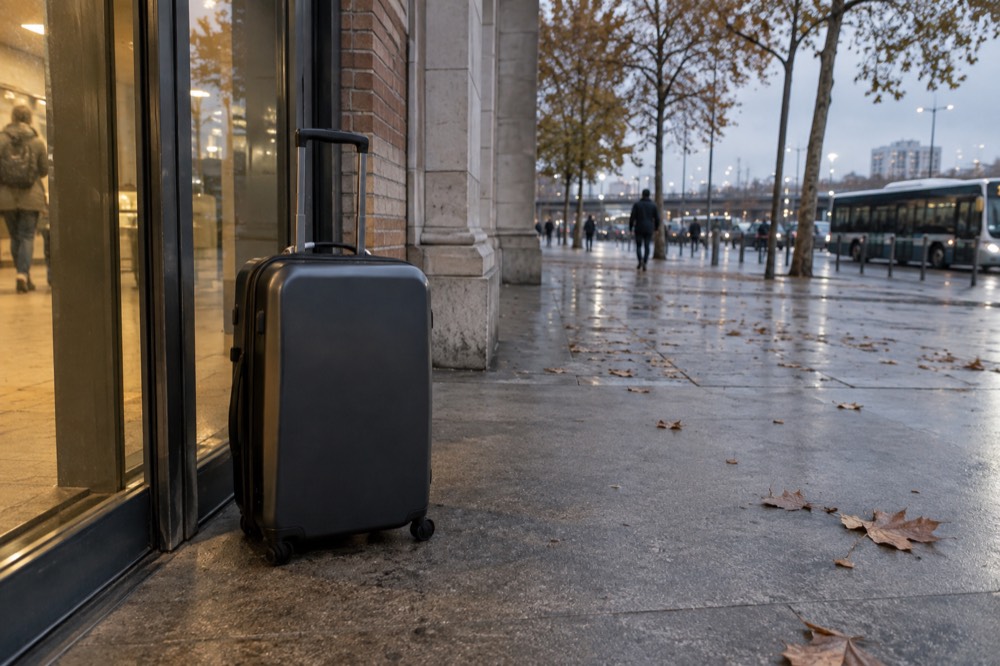
The end choice rarely needs to be complicated. Pick the cluster nearest your arrival or departure, confirm the hours on the point's own card, book with free cancellation as insurance against a plan change, and photograph everything at the counter. That is the whole system, and it takes about four minutes from phone to walking away empty-handed.
Common Questions About Left Luggage In Paris
How does left luggage work in Paris?
You book a storage point online, drop your bag during the point's opening hours against a booking reference, and collect it with the same reference before the point closes. The rate is EUR 3.90 per bag per day plus a EUR 1.99 per-bag checkout fee, with free cancellation before check-in.
How much is left luggage in Paris?
At a network storage point, EUR 3.90 per bag per day plus a EUR 1.99 per-bag checkout fee, so one bag for one day is EUR 5.89. SNCF station lockers run EUR 5.50 to EUR 9.50 per fixed 24 hours by size, and the airport desk charges from EUR 10 per day for a carry-on bag.
Can I leave luggage overnight in Paris?
Yes. Network points charge the same EUR 3.90 daily rate for each day the bag is held, and the EUR 1.99 checkout fee is charged once per bag, not per night. Three days with one bag is EUR 13.69 in total. You must collect within the point's opening hours, not in the middle of the night.
Is my bag insured in left luggage?
No. The network's guarantee is explicitly not insurance under clause 9.2.2 of its terms, and payment is capped at EUR 3,000 per claim under clause 9.4, despite the EUR 10,000 marketing headline. Claims require a signed itemised list of contents with values, notification within seven days, and a police report within 48 hours for theft.
Can I store luggage at CDG or Orly airport?
Not with the network recommended here: it has zero storage points at either airport. Both airports have a desk run by Bagages du Monde, open 07:00 to 21:00, charging from EUR 10 per day for a carry-on bag on its indicative price list, with an identity check that accepts only a national ID card or passport.
Do I need to book left luggage in advance?
Not strictly, but it is the safer play. Station lockers cannot be reserved at all and SNCF itself warns they can be full or closed for works. A network booking reserves your slot, locks the price, and cancels free any time before your scheduled check-in, so there is no cost to booking ahead.