Can I Keep My Luggage At The Airport And Go Out?
Yes, you can leave a bag at CDG or Orly and head into Paris, but the airport desk charges by the hour and needs your passport. Here is what it costs and when a city storage point is cheaper.
Can I Keep My Luggage At The Airport And Go Out?
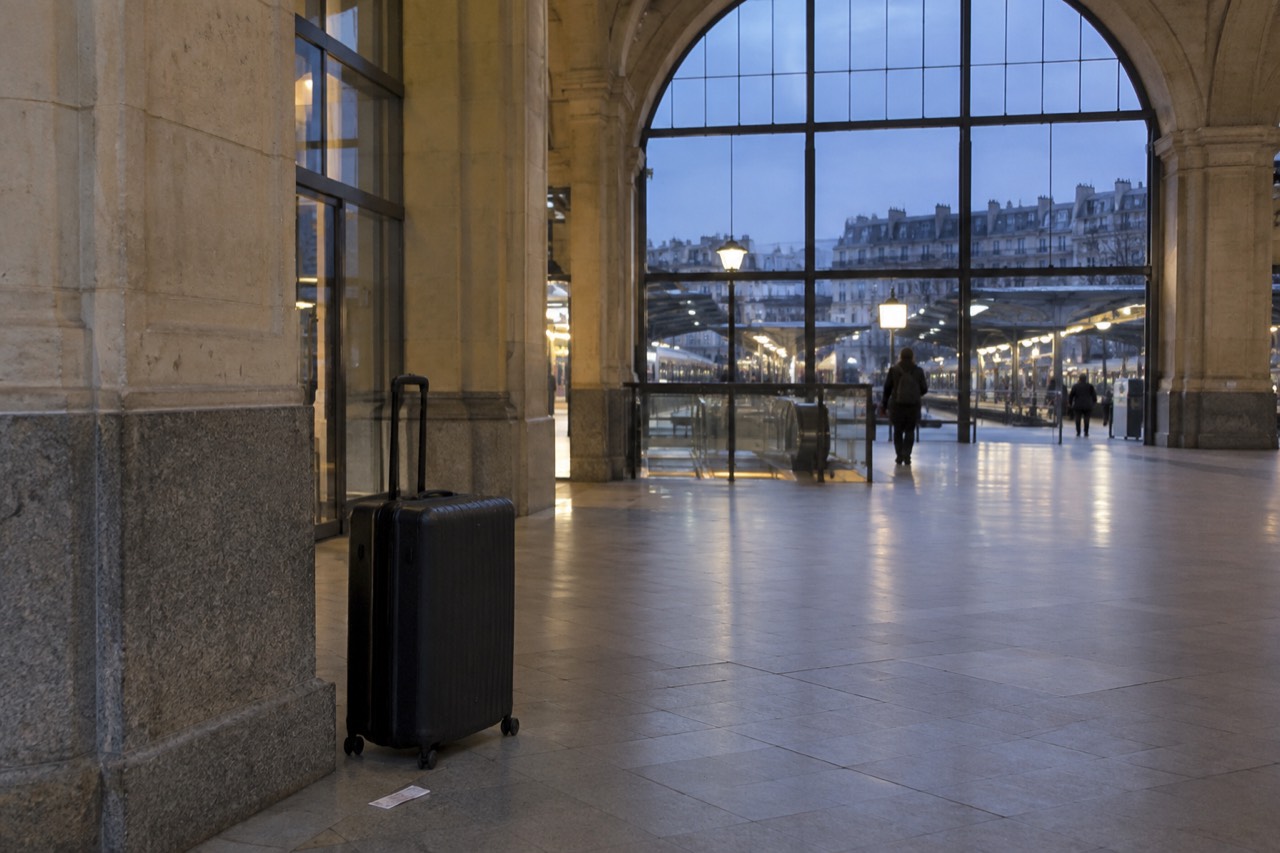
Yes, both Paris airports let you store bags and head into the city, thanks to staffed left-luggage desks run by Bagages du Monde, open daily from 07:00 to 21:00. After handing over your bag and passing an identity check, you can catch the train to Paris, though hourly rates by size, starting at EUR 3 per hour for a carry-on, make a full day pricier than city storage.
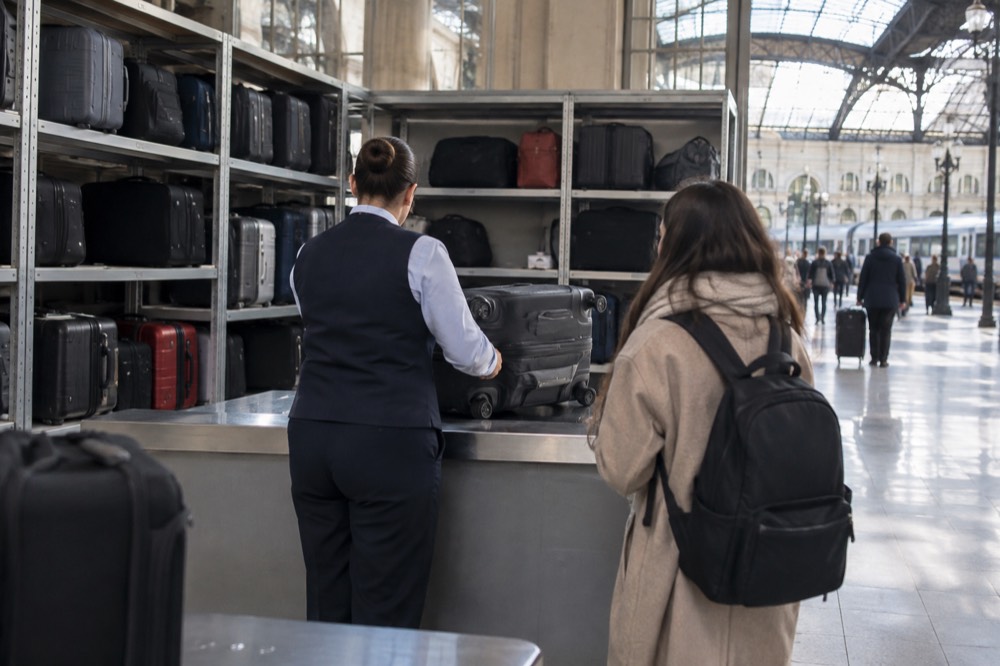
The desk at Paris-Charles de Gaulle sits in Terminal 2 at the TGV station, and the one at Orly is in Terminal 3 near the Arrivals level, close to the Metro line 14 arrival point at Gate 33a. Line 14 matters here more than it used to: since it reached Orly, it is the arriving passenger's actual landmark, and it is also the only Paris Metro line that is fully accessible end to end, with lifts at every station. If you are planning a layover dash into the city with a bag you have just dropped, that is the line that will not fight you.
Whether the airport desk makes sense depends almost entirely on how long you will be gone. The operator's own terms publish an indicative price list: carry-on baggage up to 21.5 inches from EUR 3 per hour or EUR 10 per day, medium luggage from 56 to 75 cm from EUR 4 per hour or EUR 15 per day, and large luggage over 75 cm from EUR 5 per hour or EUR 20 per day. Those are the operator's own indicative rates, not an observed checkout total, and the terms themselves say detailed and updated rates are available on the website. There is also a minimum storage duration of 2 hours and a maximum of 30 days, so the product is built around exactly the use case in the question: a few hours, not a fortnight.
| Bag size | Indicative hourly rate | Indicative daily rate | Notes |
|---|---|---|---|
| Carry-on, up to 21.5 in | from EUR 3 | from EUR 10 | Minimum stay 2 hours |
| Medium, 56 to 75 cm | from EUR 4 | from EUR 15 | Maximum stay 30 days |
| Large, over 75 cm | from EUR 5 | from EUR 20 | Rates are indicative, per bag |
Run the arithmetic for a typical layover. Say you have nine hours at CDG, a large suitcase, and you want six hours in Paris. At the indicative hourly rate that is roughly EUR 30 for the bag, before any extras. The same bag stored at a city point costs EUR 3.90 for the day plus a EUR 1.99 per-bag checkout fee, EUR 5.89 in total, and the network rate does not scale with hours or size. The airport desk is paying for convenience at the door; the city point is paying a fraction of the price for a slightly longer ride with the bag.
There is one more wrinkle worth knowing before you commit either way. The airport operator's terms describe the service as available at all terminals of both airports, but the operator's own left-luggage page and the airport authority's page both describe a single desk per airport: Terminal 2 at CDG, Terminal 3 at Orly. Treat "all terminals" as a marketing claim about who the service serves, not where the counters are. Never assume there is a desk in your own terminal, because there is not.
If a layover plan is taking shape and you would rather compare actual bookable city points than keep reading, these three are the ones most layover travellers end up choosing between:
What The Airport Desk Actually Costs, Extras Included
The headline rate is only part of the bill. Bagages du Monde prices optional extras separately: supplemental insurance at EUR 5 per EUR 500 of declared value up to EUR 3,000, reinforced packaging at EUR 10 per bag, and priority service at EUR 15. Payment is online by card, PayPal, Apple Pay or Google Pay. Unlike several SNCF station lockers, which are coins-only or cash-only, the airport desk takes cards.
The supplemental insurance point deserves a pause, because it tells you something about the baseline. The operator sells extra cover in EUR 500 increments, which means the standard service is not an insurance product, and anyone leaving something genuinely valuable should think about what happens if it goes missing. The same logic applies to city networks: Radical Storage's guarantee is advertised at EUR 10,000, but its own terms cap payment at EUR 3,000 per claim and state plainly that the guarantee is not an offer to insure your property and does not constitute a contract of insurance. Neither the airport desk nor a city point is an insurer, and neither should be treated as one.
The extras also include a service that answers a different question entirely: baggage transport. The operator will move a bag from the airport into Paris intra-muros from EUR 25 per bag, or between CDG and Orly from EUR 35 per bag, with a 50 percent surcharge for delivery in under three hours. For a traveller with an awkward connection, say landing at Orly and flying out of CDG the next morning, having the bag delivered rather than stored is a real option with a real published price. It is not cheap, but it exists, and it is quoted per bag.
Compare the all-in cost honestly. One large bag at CDG for a full day at the indicative daily rate is EUR 20, and if you want the supplemental insurance to the full EUR 3,000 that adds EUR 30, so EUR 50 before packaging or priority. The city alternative for the same bag and the same day is EUR 5.89, with the network guarantee capped at EUR 3,000 per claim and no hourly meter running. The airport desk wins on one thing only: you never have to carry the bag into Paris. Whether that is worth roughly four times the price is a decision only your itinerary can make.
Why There Is No Radical Storage Point At Either Airport
There is no Radical Storage storage point at Charles de Gaulle or at Orly. Both airport pages exist on the network's site but carry zero inventory; they are landing pages with no bookable location behind them. This site says so plainly because it matters: if you want a network bag drop at airport prices, the honest answer is to store at a station cluster on your way in, not to hunt for a point that does not exist.

The station clusters are where the inventory actually is. Gare du Nord has 10 storage points rated 4.75 across 2,937 reviews, with the earliest opening at 07:30 and the latest closing at 23:59. Gare de l'Est has 10 points rated 4.73 from 1,245 reviews, opening from 09:00. If your layover route into the city passes through either, and most routes from CDG do, dropping the bag at the station rather than at the airport desk converts an hourly bill into a flat daily one and puts you closer to where you actually want to be.
The honesty cuts both ways, so here is the airport desk's genuine advantage stated fairly: it is the only option physically inside CDG or Orly. SNCF treats the CDG 2 TGV railway station as an off-site partner station in its 2026 tender rather than a station with its own consigne, so there is no SNCF locker bank hiding in the airport either. If your layover is short, say four hours total, and the idea of hauling a suitcase onto a commuter train and back makes your shoulders ache, the airport desk at an indicative EUR 10 to EUR 20 per day is a defensible splurge. For anything longer, the arithmetic swings hard toward the city.
One forward-looking detail for anyone planning a 2027 trip: the CDG Express rail link is reported to open on 28 March 2027, running non-stop between Gare de l'Est and Charles de Gaulle in 20 minutes. When it opens, Gare de l'Est becomes the airport-link station, which quietly changes where a layover traveller should drop a bag. Storing at Gare de l'Est on an airport day would put your bag at the future airport railhead.
Should the layover plan point you toward the city rather than the terminal, this is the question worth answering before you commit:
Getting Into Paris And Back Within A Long Layover
A Paris excursion during a long layover is realistic only if you have six or more usable hours on the ground, since transfers between CDG and central Paris consume a large share of your time. Orly sits closer to the city, and Metro line 14 now reaches it directly, making it the better option for a quick trip.

The 21:00 closing time is the hard edge of every airport layover plan, and it is worth stating the caveat that comes with it. Two of the three sources for the desk's hours, the operator's own page and the airport authority's, say 07:00 to 21:00; the same company's terms claim a wider 06:00 to 22:00 depending on terminals. Publish 07:00 to 21:00 as the working figure and check before relying on an early or late slot. A bag collected at 20:50 still needs to get you back through the terminal, through security, and to a gate.
Once you are in the city, a pleasant legal fact has changed in your favour. For years, guides claimed the Paris Metro banned bags over 75 cm, with a EUR 150 fixed penalty attached. That rule came from an obsolete internal regulation, was publicly restated in May 2025 after travellers heading to stations and airports were fined, and was then dropped: in a written answer published in the Journal Officiel on 24 June 2025, the Ministry of Transport confirmed the RATP no longer applies any dimensional limit, and bags are allowed as long as they do not obstruct other passengers or pose a danger. Dragging a suitcase across the network is no longer a fineable act, though storing it is still more comfortable than dragging it.
Timing the return is where layover plans fail, so work backwards. Write down the desk's closing time, subtract the journey from your last city stop to the airport, subtract an hour for airport security and walking, and what remains is your real sightseeing window. A nine-hour layover is not nine hours in Paris; it is closer to five once both transfers, the bag drop, and the buffer are counted. Five hours is still a walk along the Seine and a long lunch, which is more than any terminal food court will give you.
What You Cannot Leave, And What ID You Need
The airport desk accepts bags only after an identity check that takes a national ID card or a passport, and nothing else: a driving licence will not get your bag accepted. Bags are then X-rayed and scanned before storage. The operator's published prohibited list bans hazardous, flammable, explosive or toxic products, weapons and ammunition, perishables, live animals, narcotics, counterfeit goods and radioactive or chemical items, with refusal and no refund if one is found.
The ID rule catches people out every day, and it is the single most practical sentence on this page for anyone with a layover plan. You will be carrying a passport anyway if you have just flown internationally, so the rule rarely bites arriving travellers, but anyone connecting domestically, or anyone whose passport is locked in the checked bag they are trying to store, should know it in advance. The X-ray and per-bag scan that follow are ordinary airport security procedure, applied to stored bags rather than carried ones.
The prohibited list is the only fully published one for any Paris storage operator, and it is worth reading before you pack a bag you intend to leave. Two items on it surprise people: perishable goods and fresh produce, which rules out leaving a bag containing the cheese you bought as a gift, and counterfeit goods, which is less exotic than it sounds if a market-stall purchase is in your luggage (see Metro Luggage Rules). Discovery of a prohibited item means refusal of service with no right to a refund, and the company may inform the authorities.
City storage points ask for none of this. A Radical Storage booking is made online, the drop-off is at a partner shop, hotel or cafe, and the partner tags the bag and puts it behind a counter. There is no X-ray and no ID check, because the product is a shop holding your bag rather than an airport security service. That is either a convenience or a compromise depending on how you weigh it, and the honest framing is that the two products are not identical: one is airport-grade screening at airport prices, the other is a flat day rate with a guarantee capped at EUR 3,000 per claim and never called insurance.
The Cheaper Alternative: Store In The City Instead
Yes, storing your bags in the city is the cheaper option. The standard Paris network rate is EUR 3.90 per bag per day plus a EUR 1.99 per-bag checkout fee, so one bag for one day totals EUR 5.89, and the fee is charged once per bag rather than scaling with nights. Against the airport's indicative EUR 10 to EUR 20 per day, the saving can pay for your return train ticket.
The station comparison deserves its own sentence, because the official SNCF consigne is the other honest alternative and it is sometimes cheaper still. At Gare du Nord the SNCF staffed consigne charges EUR 4 for up to 4 hours, EUR 7.50 for 4 to 12 hours, and EUR 9.50 for 12 to 24 hours, open 06:15 to 23:15. For a short stop the official counter wins outright; for a full day the network rate of EUR 5.89 undercuts it; and the official lockers can sell out, as SNCF itself states on its own pages. This site publishes a fuller worked comparison in its guide to Luggage Storage in Paris and a station-by-station breakdown in its Paris train station storage guide.
Where you store in the city should follow your itinerary, not the price, because the price is flat everywhere. Layover travellers arriving at Gare du Nord from a Eurostar or airport connection usually store right there and walk into Montmartre or the Marais. The Latin Quarter cluster, rated 4.71 from 2,656 reviews across its published points, suits anyone whose layover day is built around Notre-Dame and the river, and it stays bookable with points opening as early as midnight on the roster's published hours.
One practical tip that no first page of search results will give you: photograph your bag's contents and list each item with its value before you hand it over, at any storage point. Radical Storage's own terms exclude any claim where the booking did not carry a signed, itemised list of contents with estimated values, and claims must be notified within seven days of discovering a loss. If a bag is stolen, the police report is on a 48-hour clock. Two minutes with a phone camera is the cheapest protection you will ever buy.
Can You Temporarily Store Luggage At The Airport Overnight?
Yes, you can store luggage overnight for up to 30 days, since the airport's terms allow storage from a 2-hour minimum to a 30-day maximum, priced by duration and size. However, the desk closes at 21:00 and reopens at 07:00, so your bag stays locked away overnight and cannot be retrieved during those hours, meaning an early 05:00 pickup for a morning flight is not possible there.
That overnight gap is the quiet failure mode of layover storage plans. A bag left at 19:00 for a 22:00 departure the next day sits through thirteen closed hours, which is fine, but a bag you need at 05:30 does not exist as an option at either airport. Gare du Nord's network points publish hours as early as 07:30 and as late as 23:59, and the SNCF consigne there runs 06:15 to 23:15, so the earliest any of the realistic options can return a bag is a few minutes past six. Check the hours of the specific point before you book, never assume around-the-clock access, because no Paris storage point offers it despite what template page titles claim.
For the multi-day case the airport desk is simply the wrong product. Its pricing is built for hours, and the terms even mention deductible pricing starting from 3 days without explaining what that means in money, which is itself a reason to be cautious. A city point charges EUR 3.90 per bag per day with the EUR 1.99 fee charged once per bag, so three days with one bag is EUR 3.90 x 3 plus EUR 1.99, which is EUR 13.69. This site's guide to overnight and multi-day bag storage works through those sums in detail.
If the plan is now leaning toward the city, these are the three storage areas layover travellers compare most often, and the comparison is worth making before you commit:
Common Questions About Leaving Luggage At The Paris Airports
Can I Keep My Luggage At The Airport And Go Out?
Yes. Both CDG and Orly have a staffed left-luggage desk run by Bagages du Monde, open seven days a week from 07:00 to 21:00, with a minimum stay of 2 hours and a maximum of 30 days. Indicative rates run from EUR 3 per hour or EUR 10 per day for a carry-on to EUR 5 per hour or EUR 20 per day for large bags. You need a passport or national ID card to deposit a bag.
Can I leave my suitcase at the airport overnight?
Yes, up to 30 days. The desk closes at 21:00 and reopens at 07:00, so the bag is stored through the closure but cannot be collected during it. If you have an early morning flight, no Paris storage option, airport or city, can return a bag before roughly 06:00.
Is there a Radical Storage point at CDG or Orly?
No. Both airport pages on the network's site exist but carry zero bookable locations. The nearest real inventory is at the station clusters in the city, principally Gare du Nord with 10 points and Gare de l'Est with 10. For anything beyond a few hours, the city point. The airport's indicative daily rate is EUR 10 to EUR 20 per bag depending on size, while a city point costs EUR 3.90 per bag per day plus a EUR 1.99 per-bag checkout fee, EUR 5.89 for one bag for one day. For a short stop of up to 4 hours, the SNCF consigne at Gare du Nord at EUR 4 is cheaper than both. A national ID card or a passport, and nothing else. The operator states that luggage is checked in after an identity check accepting those two documents only, then X-rayed, then scanned and stored. A driving licence will not be accepted. Yes. The airport operator offers baggage transport from EUR 25 per bag between Paris intra-muros and the airports, and from EUR 35 per bag between CDG and Orly, with a 50 percent surcharge for delivery in under three hours.Is the airport desk or a city storage point cheaper?
What identification do I need to store a bag at CDG or Orly?
Can I get my bag delivered instead of storing it?