Do Hotels In Paris Offer Luggage Storage?
Most Paris hotels hold bags for their own guests on checkout day, but rarely before check-in and rarely for non-guests. Here is what is actually published, what the law says, and how to fill the gap.
Do Hotels In Paris Offer Luggage Storage?
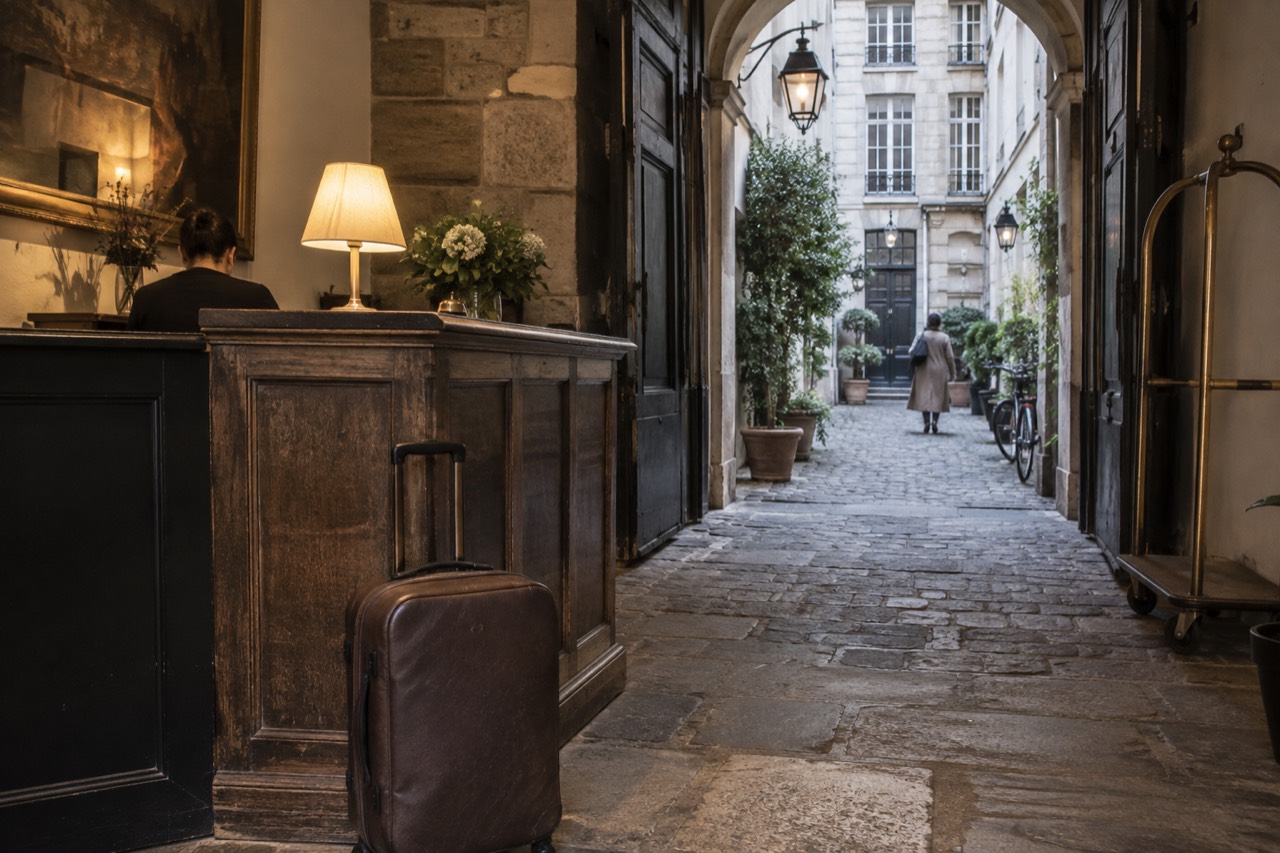
Yes, most Paris hotels will hold your luggage, but only for their own guests, and the offer is reliable on exactly one day: the day you check out. Before check-in day, and for anyone who is not staying at the hotel, there is no published chain policy in Paris promising anything, and the answer depends entirely on the person at the desk.
That asymmetry is the single most useful thing to understand about hotel bag storage in Paris. A hotel holding your bag after checkout is doing something hotels everywhere do, quietly and usually free, because you were a paying guest and the bag is leaving on a train that evening. A hotel holding your bag at 09:00 on the day you arrive, five hours before check-in opens, is doing you a favour, and favours get refused when the luggage room is full, the desk is short-staffed, or the hotel is full of people arriving off the same morning flights.
No Paris hotel chain publishes a written luggage-holding policy that this site could find. Accor, Marriott, Hilton, B&B Hotels, Citadines and Adagio were all checked for a published bagagerie policy covering Paris properties, and none has one that says, in writing, "we hold bags for non-guests" or "we hold bags for three days after checkout". What exists instead is practice: individual front desks deciding case by case, which means the answer you get at 09:00 may not be the answer another traveller gets at 15:00 in the same lobby.
The practical consequence is that hotel luggage storage in Paris works as a bonus, not as a plan. If the desk says yes, you have saved yourself a few euros. If the desk says no, or says yes but only until the evening when your train is late, you need a fallback, and the fallback has to be found while standing in a lobby with a suitcase. This article sets out what is actually known about the practice, what French law says a hotel is on the hook for when it holds your bag, and how the networked storage options that include Paris hotels themselves fit into the picture.
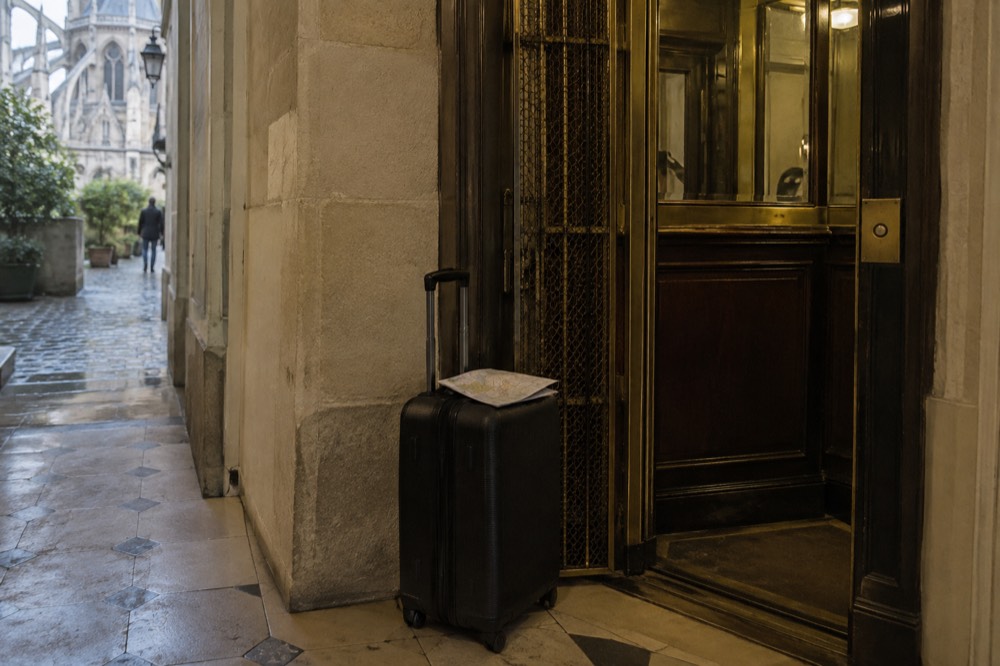
For the arrival-day gap, the moments when your room is not ready and the desk cannot help, the bookable alternative is a Radical Storage point. Every storage point recommended on this site is a real Radical Storage partner location, and this site neither owns nor operates any of them. The rate you should expect in Paris is EUR 3.90 per bag per day, plus a EUR 1.99 per-bag fee added at checkout, so one bag for one day is EUR 5.89 in arithmetic on those two published figures. Radical Storage advertises "from EUR 1.90 a day", but that is a global marketing floor: across 329 Paris location cards counted in research, 316 showed EUR 3.90, ten showed EUR 1.90, all in the Bercy cluster, and three showed EUR 5.
Will Hotels In Paris Hold Your Luggage Before Check-In Day?
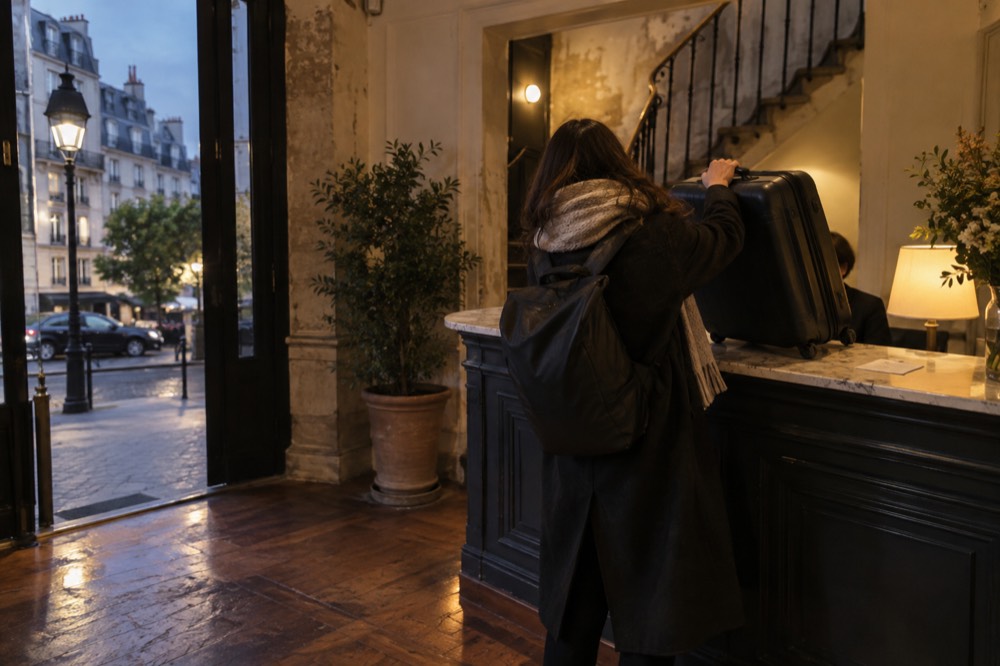
Some will, some will not, and no Paris hotel brand commits to it in writing. The pattern in traveller reports is that a hotel holding a bag for a guest who arrives before check-in is common but discretionary, while a hotel holding a bag for someone with no reservation at all is rare. Treat the early-arrival hold as a pleasant surprise, not a right.
The reason for the asymmetry is capacity and liability, not rudeness. A Paris hotel luggage room, where one exists, is sized for the day's own turnover: the bags of departing guests waiting for evening flights. On a busy morning it is already full before the first early arrival appears. A desk that accepted every pre-check-in bag would be storing luggage for people whose rooms are not even vacant yet, in a space designed for people who have already paid and left.
There is also a legal texture to the desk's hesitation, and it is worth knowing because it explains the pause you sometimes see when you ask. French Civil Code article 1952 makes a hotelkeeper the depositary of the clothing, luggage and effects of travellers who lodge there, a regime French law calls the "necessary deposit". Article 1953 then caps the hotelkeeper's liability, to the exclusion of any lower contractual limit, at one hundred times the daily price of the room, unless the traveller proves the loss resulted from the fault of the hotel or of people it is responsible for. The details are on the article as published on Legifrance.
What that means in plain terms: the strong, codified protection attaches to guests. A hotel holding a bag for someone who is not lodging there is plausibly outside that regime altogether, on ordinary contractual terms instead. This site will not state that as law, because no French legal source saying it in those words could be found, but it is exactly the question worth asking the desk before you hand over a suitcase as a non-guest: "where does my bag sit, and who is responsible for it?" A shrug is an answer.
If the hotel you are staying at is the one refusing, the arrival-day gap is the moment a booked storage point earns its fee. Points near the big stations open early: the Gare du Nord cluster's earliest published opening is 07:30, the Gare de Lyon and Montmartre clusters list points open from midnight, and the Louvre cluster's earliest opening is 07:00. Hours come from each point's own card and vary, so check the specific point before relying on it, and never assume a Paris storage point is open around the clock, because "24/7" is a template string in page titles, not a fact about any real desk.
What Happens To Your Bag After Checkout?
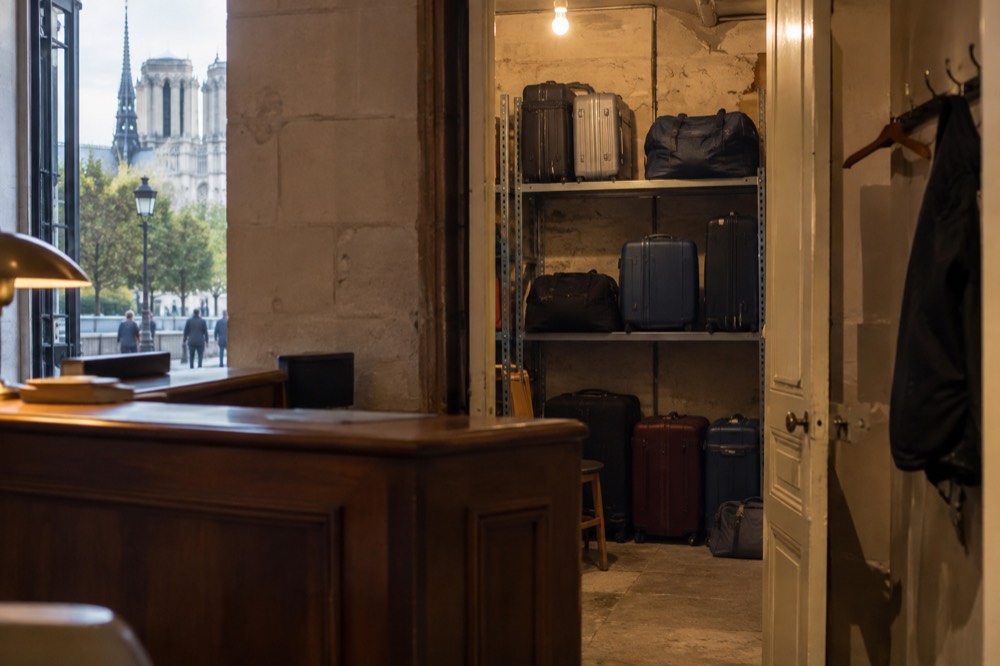
Checkout day is where Paris hotel luggage storage genuinely works. The dominant pattern in traveller reports is that a hotel holds a departing guest's bags free, for the rest of that day, in the luggage room or behind the desk. The two things to confirm before you walk out are how late you can collect, and whether the hold extends past that same day, because same-day is the norm and overnight is already a favour.
The same-day hold is close to universal in practice, though again, no Paris chain publishes it as a promise. It is also the moment where the hotel is comfortably the best option: it is free, it is on your way out, and the article 1953 cap, one hundred times the room rate, is real protection for the hours between checkout and your train. That statutory liability ceiling is a far stronger position than any commercial storage product offers a departing guest.
The edges are where it frays. An evening collection deadline is common, and a night train or a late flight can fall outside it. A hold into the next day, or for two days while you go to Normandy, is sometimes granted and sometimes refused, and the refusal is not the desk being difficult: the luggage room is about to fill with today's turnover. If your plan depends on a multi-day hold, the honest move is to plan on the answer being no, and to look at the alternatives in the guide on overnight and multi-day bag storage in Paris instead.
One more checkout-day detail that people miss: the bag you leave is the bag you described. If anything goes missing, the statutory cap is the ceiling, not the floor, and you will be asked what was in the bag. Photograph the bag, and if it contains anything valuable, say so at the desk when you leave it, because a dispute about contents is much harder to win after the fact.
| Situation | Typical Paris hotel answer | How reliable |
|---|---|---|
| Own guest, checkout day, collect by evening | Yes, free, luggage room or desk | Very reliable in practice, unpublished as policy |
| Own guest, arriving before check-in | Often yes, discretionary | Unreliable: depends on space and the desk |
| Own guest, hold overnight or longer | Sometimes yes | Treat as a favour that may be refused |
| Non-guest with no reservation | Rarely yes | Do not plan on it |
| Non-guest with a booking for later dates | Sometimes yes | Ask, but have a fallback |
What Is A Hotel Actually Liable For When It Holds Your Bag?
French law caps a hotelkeeper's liability for a guest's effects at one hundred times the daily room price, under Civil Code article 1953, unless the traveller proves fault by the hotel. A separate, lower cap of fifty times the room price applies to items left in vehicles parked on premises the hotel has exclusive use of. The caps exclude any lower contractual limit a hotel might try to impose.
That is the strongest legal fact in the whole hotel-storage picture, and it is worth more to you than any marketing line about security. It is also the honest benchmark against which commercial storage should be read. Radical Storage's guarantee is advertised as EUR 10,000, but its own terms, clause 9.4, cap payment at EUR 3,000 per claim, and clause 9.2.2 states plainly that the guarantee "is not an offer to insure your property and does not constitute a contract of insurance". The two figures only ever belong together: a reader deciding whether to leave a laptop in a bag needs the cap, not the headline.
The terms add procedural teeth that most people never read. A claim must be notified within seven days of discovering the loss or damage, and theft or criminal damage must be reported to the police within 48 hours of becoming aware of it. Clause 9.8.1 excludes any claim where the booker did not supply a signed, itemised list of the bag's contents with estimated values. The practical tip that follows is the single most actionable thing in this article: photograph your bag's contents and write down their values before you hand the bag to anyone, hotel desk or storage point alike, because that list is a condition of any network claim.
Valuation matters too. Radical Storage's terms value items at "their current market value minus wear and tear", and state that "the sentimental value of items shall not be relevant to their valuation". A three-year-old suitcase is worth its second-hand price, not its replacement price. Neither regime, statutory hotel deposit or commercial guarantee, is a substitute for travel insurance for anything genuinely expensive.
When A Hotel Is Itself A Storage Point
Some Paris hotels hold bags for the Radical Storage network as booked storage points, which flips the usual question. A hotel in the network will take a non-guest's bag, at a published price, for a booked slot, because the booking, not a room reservation, is what makes you a customer. The network's own Paris page lists points typed "Hotel" alongside shops, restaurants and local companies.
This is the bridge between "my hotel will not hold it" and a booked alternative, and it is worth understanding because it removes the awkwardness of asking a stranger for a favour. When you reserve a slot at a hotel storage point, you are not asking the desk to bend a rule; you are arriving with a booking reference, a price already agreed, and the network's guarantee behind the transaction. Radical Storage's Paris page on the day of this site's research listed "Hotel Paris Gare De Lyon" among its location cards, typed "Hotel", one of several such points in the city.
The honesty caveat is that a hotel point is still a hotel, with hotel hours. On the day of the research sweep, one Gare de Lyon hotel point in the network was showing "Closed" on its card. That is exactly why this site never generalises opening hours across points: each point's hours come from that point's own record, and a hotel point can be shut when the desk is unmanned even if other points nearby are open until midnight.
| Option | Who can use it | Typical cost | Liability position |
|---|---|---|---|
| Your own hotel, checkout day | Guests only | Free in practice | Statutory, capped at one hundred times the room price |
| Your own hotel, arrival day | Guests, discretionary | Free if granted | Same statutory regime |
| A hotel as network storage point | Anyone with a booking | EUR 3.90/bag/day + EUR 1.99 fee | Network guarantee, EUR 3,000 per claim cap |
| A random hotel, no booking | Almost nobody | n/a | Unclear, do not rely on it |
The network's Paris coverage is broad enough that the point you book is usually near where you actually are, not near a depot. The Louvre cluster alone carries a 4.8 rating across 3,152 reviews on its published points, with the earliest opening at 07:00, which covers the arrival-morning gap a hotel leaves. The Latin Quarter and Notre-Dame cluster rates 4.71 from 2,656 reviews across its points, several open from midnight. Ratings are the network's own published figures, not an audit.
The One Gap Worth Planning For
The reliable way to think about it: your hotel covers the end of your trip, and only the end. The gap is the start, the morning you arrive before check-in, plus any day trip or long layover in the middle. Fill that gap with a booked point near wherever you actually need your hands free, and the hotel's yes-or-no answer stops mattering.
Arrival day is the classic case. A Eurostar into Gare du Nord at 09:00, a hotel in the Marais with check-in from mid-afternoon, and six hours of walking in between is the exact shape of the problem, and it is the shape most Paris trips take. The same applies to a mid-trip day: a morning train to Versailles or an afternoon at the Catacombs, both of which refuse suitcases outright, with a hotel that has already said the luggage room is for checkout day only.
The last day deserves its own mention because it is the one travellers get wrong in both directions. Some assume the hotel will hold the bag until late evening and get caught by the stated collection deadline; others assume nothing and drag a suitcase to a dinner reservation. The guide on your last day in Paris with a suitcase works through the timing in detail, but the short version is: confirm the collection deadline at checkout, in person, and if your departure falls after it, book a point near the station you leave from, where the latest published closing times run to 23:59.
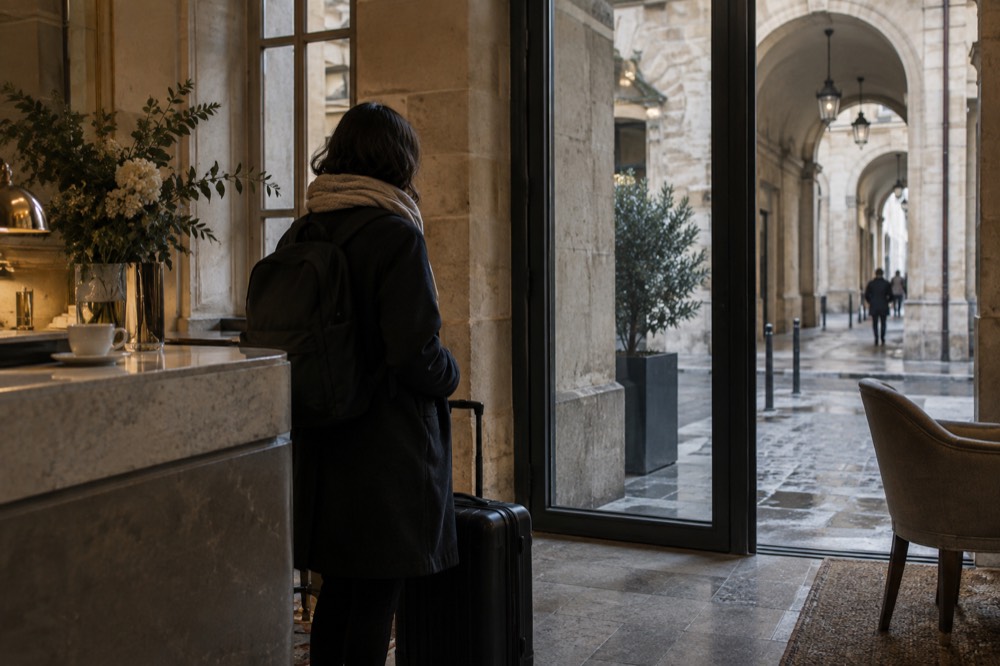
For readers weighing the hotel-desk question against the stranger-with-a-booking question, the safety picture is laid out in the guide on whether Paris bag storage is safe, and the specific question of non-guest holds is covered in the companion piece on whether a hotel will hold luggage if you are not staying there. The short safety answer: a staffed desk with a statutory liability cap, or a booked network point with a guarantee capped at EUR 3,000 per claim, are both reasonable places for a suitcase; an unlocked corridor behind a "bagagerie" sign you never saw is not, and you are entitled to ask which one you are looking at.
The Louvre cluster is the one this site points arrival-day readers at most often, because it solves the commonest version of the problem: a morning in the centre with hands free and a bag waiting a short walk from where you will spend the afternoon. Its points rate 4.8 across 3,152 reviews, open from 07:00 at the earliest and closing by 22:00 at the latest, which brackets almost every arrival-day schedule a Paris hotel leaves uncovered.
None of this makes Paris hotels ungenerous. The pattern in what travellers report is that desks say yes far more often than any published policy would require. The point of knowing the limits is not to distrust the desk, it is to stop building a whole day's plan on an answer you have not asked for yet. Ask early, on arrival, about both ends of your stay, and you will know exactly which days the hotel covers and which days you need to book something yourself. That is the whole skill of luggage storage in Paris, and Luggage Storage in Paris exists to make the booking half of it a two-minute job.
Common Questions About Hotels And Bag Storage In Paris
Do Hotels In Paris Offer Luggage Storage?
Yes, most Paris hotels hold luggage for their own guests, and the offer is dependable on checkout day, when it is usually free. Before check-in it is discretionary, and for non-guests there is no published chain policy promising anything. Treat the hotel as covering the end of your trip, and plan a booked storage point for the arrival-day gap.
Will hotels in Paris hold your luggage if you are not a guest?
Rarely, and never as a matter of published policy. No Paris hotel chain publishes a luggage-holding policy for non-guests. Some individual desks will take a bag from someone with a future reservation, but you should not plan on it. A hotel that is itself a Radical Storage point will take a non-guest's bag, but only against a booking, at the published rate.
How long will a Paris hotel hold luggage after checkout?
Same day is the norm, usually until an evening collection deadline that varies by property. Overnight or multi-day holds are sometimes granted and sometimes refused, depending on luggage-room space. Confirm the collection deadline at checkout in person, and if your departure falls after it, book a storage point near your departure station instead.
Is hotel luggage storage in Paris free?
In practice, yes, for the hotel's own guests on checkout day and often on arrival day too. No Paris chain publishes a fee schedule for holding guests' bags, and the reports this site reviewed describe free holds with occasional refusals rather than charges. A hotel acting as a booked network storage point is different: that is a paid service at the network's rate.
What is a hotel liable for if my stored bag is lost or stolen?
French Civil Code article 1953 caps a hotelkeeper's liability for a guest's effects at one hundred times the daily room price, unless the traveller proves fault by the hotel, and this cap overrides any lower contractual limit. For a non-guest, the position is legally murkier, which is one more reason to ask the desk directly before handing over a bag you are not entitled to have held.
What if my hotel says no on arrival day?
Book a Radical Storage point near wherever you will actually be. The rate to expect is EUR 3.90 per bag per day plus a EUR 1.99 per-bag checkout fee, so one bag for one day is EUR 5.89 in arithmetic on those published figures. Points near the main stations open as early as 07:00 or 07:30, and hours vary by point, so check the specific location's card before you set off.