How Early Can You Check Into A Hotel In Paris?
An honest answer to how early you can check into a Paris hotel, what happens when the room is not ready, and where the suitcase goes in the meantime.
How Early Can You Check Into A Hotel In Paris?
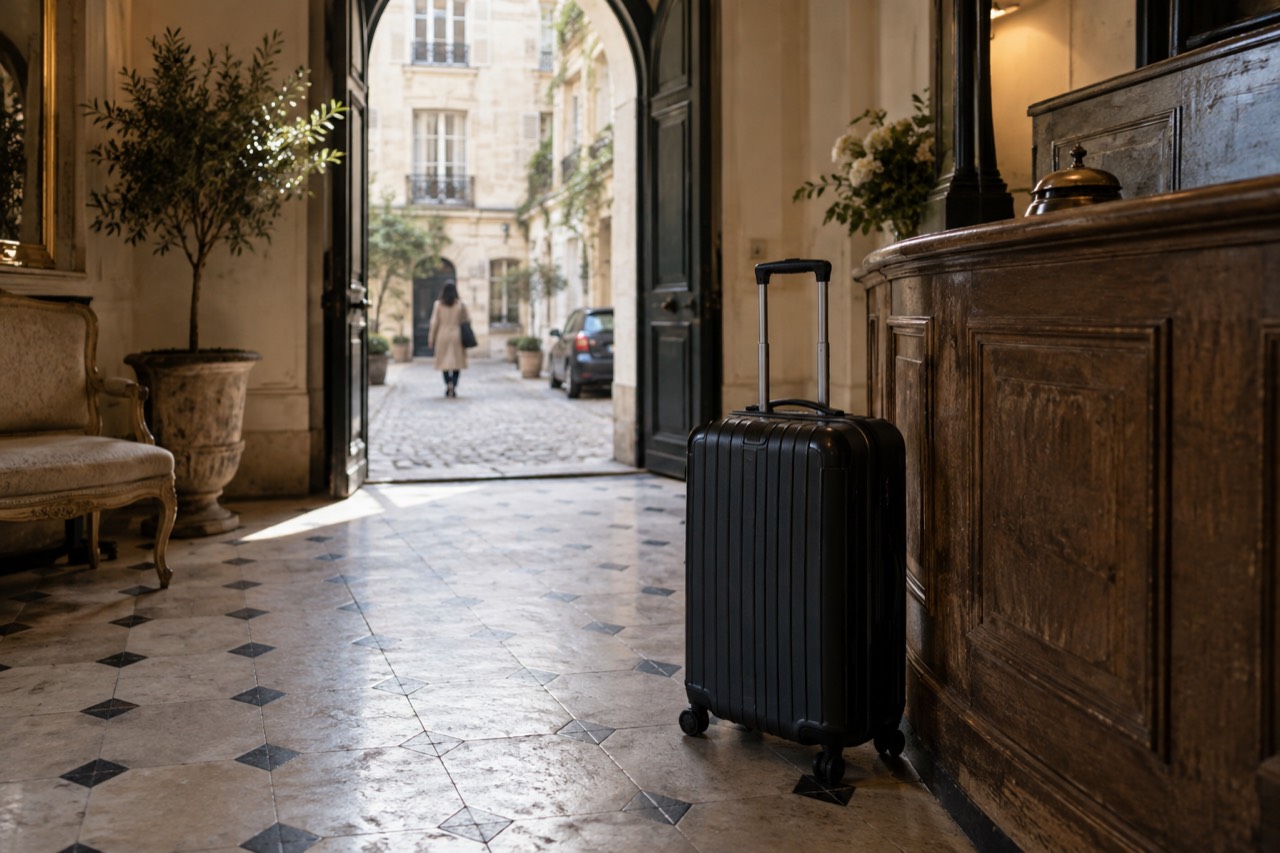
There is no published Paris-wide check-in time, and no industry figure exists to cite. Individual properties set their own hour, commonly printed on the booking confirmation somewhere in the mid-afternoon range, and the only reliable answer is the one your specific hotel gives you. Ask before you travel, because the gap between a 09:00 arrival and a mid-afternoon check-in is exactly the window your suitcase needs somewhere to sit.
The honest starting point is a negative finding, and it matters. Across the research behind this site, no hotel association, no chain operating in Paris and no tourism body publishes a standard check-in time for the city. What circulates online, usually a confident "check-in is 15:00, check-out is 12:00", rests on individual property pages, not on any distribution of actual Paris hotel policy. A single Marriott page or one Montparnasse property's website cannot establish what three thousand hotels do.
That does not leave you helpless. Your booking confirmation is the contract that governs your stay, and it names a check-in time for your room. If it does not, the hotel's own website does, and a two-line email before departure settles it with the only authority that counts. Hotels also answer this question by phone faster than almost any other, because a guest who arrives at 09:00 expecting a room is a problem they would rather prevent than manage.
Why rooms are genuinely not ready earlier is worth understanding, because it explains why asking nicely has limits. Paris hotels, like hotels everywhere, turn rooms between a morning check-out and an afternoon check-in, and housekeeping schedules are built around that cycle. A room vacated at 11:00 may be cleaned by 13:00 or may not, depending on staffing that day. Early check-in is therefore rarely a policy question, it is a cleaning-sequence question, and the front desk at 09:00 often honestly does not know the answer yet.
The practical frame for the rest of this article: treat early check-in as a bonus, and plan the hours before it as hours you will spend suitcase-free or suitcase-dragging. Every hour between a morning arrival and a mid-afternoon check-in is an hour the bag has to be somewhere, and Paris is a city where the major sights will not take it. The Louvre caps bags at 55 x 35 x 20 cm, the Catacombs at 40 x 30 x 20 cm with no cloakroom at all, and the Eiffel Tower has no left luggage of any kind. A plan for the bag is a plan for the day.
For travellers arriving on a morning Eurostar or an overnight flight, the station or airport side of the equation is covered in detail in the guide to Paris hotel check-in and checkout times, and the wider question of what hotels will and will not hold is covered in do Paris hotels offer luggage storage. This piece focuses on the hours themselves.
Do Hotels In Paris Offer Early Check-In?
Yes, sometimes, and almost never as a guaranteed right. Some Paris hotels grant early check-in free when a room happens to be clean, some charge for it, some offer it only to loyalty members or to guests who request it in advance, and none of the chains operating in Paris publishes a written early check-in policy you can rely on before asking. Treat it as a request you make twice: once before arrival, once at the desk.
The research picture here is candidly thin, and saying so is more useful than pretending otherwise. No Paris chain, from the budget groups to the luxury houses, publishes a written early check-in policy on a page this site could verify. What exists instead is a mass of individual reports: travellers describing early check-ins granted freely, others describing refusals at identical hotels on different days, and no way to turn those stories into a rule. The honest conclusion is that early check-in in Paris is discretionary, variable, and worth requesting rather than expecting.
Timing of the request changes the odds more than anything else. A request made in the booking notes or by email a day or two ahead lets the hotel sequence housekeeping with your arrival in mind, which is the only lever that actually creates an early room. A request made at the desk at 08:30 asks the hotel to reorder a cleaning schedule already in motion, which is why the same request succeeds on a quiet Tuesday and fails on a fully sold Saturday. If the arrival is very early, say a red-eye landing at 06:30, some hotels will offer the previous night at a reduced rate so the room is genuinely yours on arrival, which is a different product from early check-in and is priced accordingly.
Loyalty status is the one structured route. Members of a chain's programme routinely report earlier access to rooms than walk-in guests at the same property, because the hotel can see the relationship and the room allocation software often prioritises them. If you hold status anywhere, book the Paris stay inside that chain and mention it in the request. It is not a guarantee either, but it is the closest thing to one that exists in this market.
What you should not do is build a plan that fails without early check-in. The traveller who lands at 08:00, budgets two hours to the hotel, and assumes a 10:30 room has a 50/50 chance of spending the morning in the lobby. The traveller who lands at 08:00 and assumes the bag will be stored until 15:00 is never disappointed, and on the good days the room appears early and the plan simply improves. Paris rewards the second kind of traveller.
What If Your Room Is Not Ready?
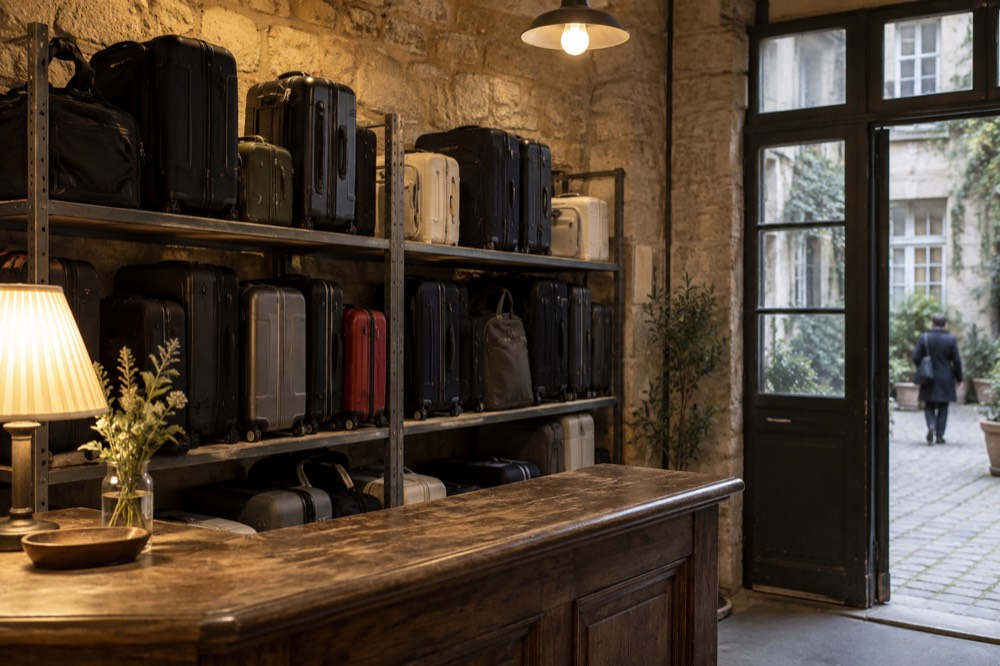
The standard fallback is that the hotel stores your luggage and you come back. Nearly all Paris hotels will hold a checked-out or waiting guest's bags, though no chain publishes a written holding policy, how long they will hold, or any liability terms. The bag sits in a luggage room or behind the desk, you get a tag, and you reclaim it when the room is ready or before you leave for the evening.
This is the moment to ask one question most travellers never think to ask: what is the hotel actually responsible for if the bag goes missing from that luggage room? French law gives a real answer, and it is smaller than most people assume. Under article 1953 of the French Civil Code, a hotelkeeper's liability for a guest's effects is capped at one hundred times the nightly room rate, unless the guest can prove the loss resulted from the hotel's fault, per the article as published on Legifrance. The cap therefore scales with what you paid for the room, and at a budget property it can be a surprisingly small number relative to the value of a suitcase full of electronics. The underlying liability for a bag held before check-in is legally murkier still, because the deposit rules attach to guests who lodge at the hotel.
That is not an argument against using the hotel's luggage room, which is a normal, widely used and generally fine service. It is an argument for not leaving a laptop, a passport batch or jewellery in a bag parked behind a reception desk for nine hours, and for keeping anything genuinely valuable on your person. The same logic applies to every storage option in this article, and it is the reason the difference between a guarantee and a liability cap matters when you choose one.
The other practical point is the return trip. A bag dropped at 09:00 and reclaimed at 15:00 means six hours tethered to one address, which constrains the day more than most travellers expect. A bag dropped at a storage point near a station or a sight you actually planned to visit means the day stays open. Some of the decision is cost, which the next section prices out, but most of it is geography: store the bag where the morning is going to happen, not where the bed is.
Where Does The Suitcase Go Until Then?
Three realistic options cover almost every case: the hotel's own luggage room, an official SNCF station consigne where one exists, or a bookable Radical Storage point, which is what this site partners with. Each has different hours, different prices and different liability terms, and the right choice usually depends on where your morning is going rather than on cost alone.
The station option deserves the first look because it is the one with published, official prices. Five Paris mainline stations have an in-station SNCF consigne: Gare du Nord, Gare de Lyon, Montparnasse, Gare de l'Est and Austerlitz. Gare du Nord runs a staffed service at EUR 4.00 for up to 4 hours, EUR 7.50 for 4 to 12 hours and EUR 9.50 for 12 to 24 hours, open 06:15 to 23:15 daily; Eurostar's own help pages locate it on the lower ground floor next to platform 3, opposite the exit marked Cour de taxis, per the Eurostar help centre. The locker stations charge EUR 5.50 to EUR 9.50 by locker size for a fixed 24 hours, plus EUR 5 per further day. Saint-Lazare and Bercy have no in-station consigne at all, which SNCF's own station list confirms, so travellers in that half of the city are choosing between a hotel luggage room and a storage network from the start.
The network option is what this site earns from, and the terms should be stated plainly. Every storage point recommended here is a Radical Storage partner location, a shop, hotel or cafe holding bags behind a counter. This site neither owns nor operates any of them; every one is a Radical Storage partner location. The real Paris rate is EUR 3.90 per bag per day, not the EUR 1.90 the network advertises, and a EUR 1.99 per-bag fee is added at checkout, so one bag for one day is EUR 3.90 plus EUR 1.99, EUR 5.89 in arithmetic on the two published figures. The network's guarantee is advertised at EUR 10,000 but capped at EUR 3,000 per claim in its own terms, and its terms state plainly that it is not insurance. Hotels appear among the network's Paris points, including at least one at Gare de Lyon, so "a hotel holding bags" and "a booked storage point" sometimes describe the same building with very different terms attached. The full index of guides sits on Luggage Storage in Paris.
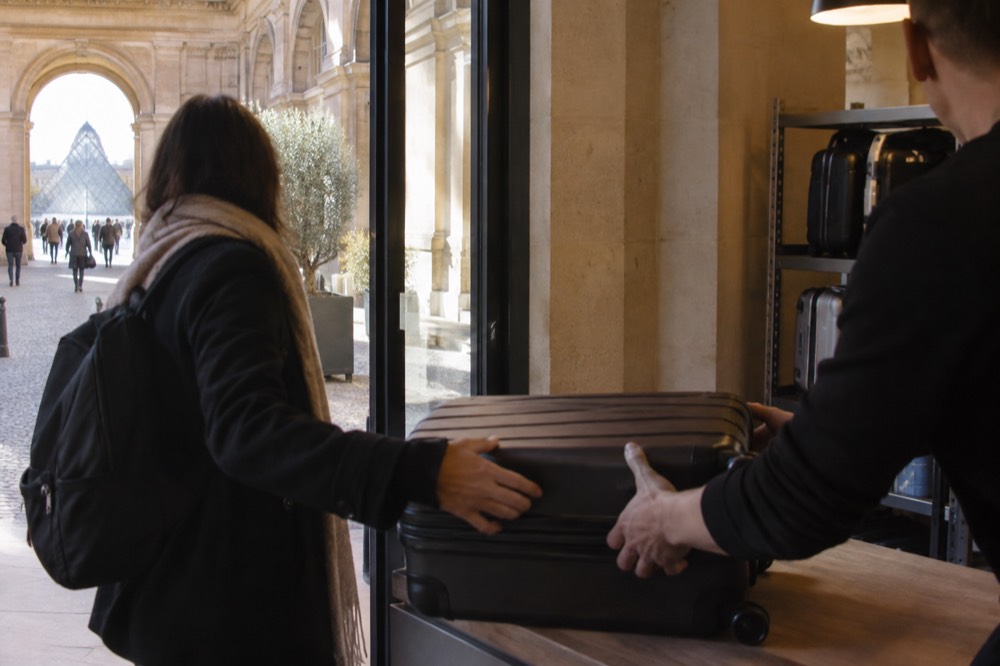
The comparison between the official consigne and a network point is genuinely close and worth doing honestly. For a short stop the station wins on price: four hours at Gare du Nord is EUR 4.00 against EUR 5.89. For a longer hold the network wins: three days with one bag is EUR 3.90 times three plus EUR 1.99, EUR 13.69, against EUR 15.50 for a small locker at Gare de Lyon. The station also sells out, as SNCF itself warns, and its lockers can be closed for works, while a booked network point is held for you. The full worked comparison is in Paris bag storage or the station consigne.
How Much Does The Waiting Window Cost?
Priced per bag, the hours between arrival and check-in cost roughly EUR 4 to EUR 6 for a single day whichever way you store it: EUR 4.00 for four hours at the Gare du Nord consigne, EUR 5.89 for a day at a standard Radical Storage point, EUR 9.50 for a full 24 hours at the staffed Gare du Nord desk. Two bags roughly doubles every line, including the network's per-bag checkout fee.
The table below puts the realistic options side by side for one bag, using only published figures. Every network line includes the EUR 1.99 per-bag checkout fee, because a price quoted without it understates a one-day booking by about a third.
| Option | One bag, one day | Notes |
|---|---|---|
| Gare du Nord consigne, up to 4 hours | EUR 4.00 | Staffed desk, 06:15 to 23:15, ID required |
| Gare du Nord consigne, 12 to 24 hours | EUR 9.50 | Same desk, longer duration tier |
| SNCF locker (Lyon, Est, Austerlitz) | EUR 5.50 to EUR 9.50 by size | Fixed 24 hours, plus EUR 5 per extra day |
| Radical Storage point | EUR 5.89 | EUR 3.90 day rate plus EUR 1.99 per-bag fee |
| Radical Storage point, 3 days | EUR 13.69 | Day rate times three, fee charged once per bag |
| Hotel luggage room | Usually free for guests | No published chain policy on duration or liability |
Read the last line carefully. "Usually free" is a report-level pattern, not a published policy: no Paris chain publishes a written luggage-holding policy, a maximum holding duration, or liability terms for its luggage rooms, and this site's research could not find one. Free and undocumented is a fine deal for a coat and a small case for three hours. It is a weaker deal for a laptop bag held overnight, given the civil-code liability cap described earlier and the fact that hotel luggage rooms are not staffed vaults.
One more cost has nothing to do with storage: the fine for doing nothing with the bag. Under the French law of 28 April 2025 on transport security, a bag left unattended in a station now carries a fixed penalty of EUR 72, rising to EUR 150 where the bag carries no label and EUR 180 for manifest voluntary abandonment, with higher ceilings of up to EUR 1,500 in the escalated tiers, as reported on the law's penalties. SNCF's own figures say an unattended bag takes 19 minutes to deal with on average and that 360 items are left behind weekly. Nobody plans to abandon a suitcase, but a bag parked "just for an hour" beside a cafe table while you sightsee is exactly the case the law targets. Storing it properly is cheaper than the fine.
What About Arriving Very Early Or Very Late?
For a very early arrival, store the bag where you land, at a station consigne or a booked storage point, and go to the hotel only at check-in time. For a late arrival, Paris hotels range from 24-hour desks to keyed entry codes arranged in advance, and the check-in time itself stops mattering because the room is held. The storage question is almost entirely an early-arrival question.
Very early arrivals in Paris usually come from two directions, and each has its own geography. The overnight flight lands at CDG or Orly in the morning, and the Eurostar arrives at Gare du Nord from around 07:00 onward. Radical Storage has no storage point at either Paris airport, a gap confirmed unchanged in September 2026, so the airport arrival's move is to take the train into the city first and store the bag at the station end. The airport operator Bagages du Monde does run a left-luggage desk at both airports, open 07:00 to 21:00, with an indicative rate list of from EUR 10 per day for carry-on bags up to EUR 20 per day for large luggage, and a two-hour minimum, but for a day in central Paris the cheaper arithmetic is usually to bring the bag in and store it once.
The Eurostar arrival is simpler because the storage is in the same building you arrive in. Beyond the SNCF consigne, the Gare du Nord area carries a cluster of Radical Storage points, sixteen of them, opening as early as 07:30, with a 4.75 rating across 2,937 reviews on the published points. An 08:00 arrival can be suitcase-free by 08:20. From March 2027 the map shifts slightly, because the CDG Express rail link is reported to open on 28 March 2027, running non-stop between Gare de l'Est and Charles de Gaulle in 20 minutes, which will make Gare de l'Est the airport-link station and change where morning arrivals want their bags.
Getting around with the case before you store it has also become easier than the old guides claim. The RATP's former 75 cm luggage limit no longer applies: answering a written parliamentary question published in the Journal Officiel, the Ministry of Transport confirmed the dimensional restriction has been dropped and bags are authorised as long as they do not obstruct other passengers, per the parliamentary answer. The rule that replaced it was the one that fined travellers in spring 2025, up to EUR 150, before being withdrawn. A full-size suitcase on the Metro is legal, merely unpleasant at rush hour.
Late arrivals invert the problem. If your train reaches Paris at 23:30, check-in time is irrelevant because the hotel holds the room; what matters is whether the desk is staffed and how you get in. Confirm this in advance, because Paris hotels handle it differently and no city-wide rule exists. And if the last day is your concern rather than the first, the mirror-image guide to your last day in Paris with a suitcase covers checkout-to-flight hours, which is the same problem with the arrows reversed.
Common Questions About Early Check-In In Paris
How Early Can You Check Into A Hotel In Paris?
There is no city-wide check-in time and no published industry figure. Your booking confirmation names the hour for your room, typically somewhere in the mid-afternoon range, and the hotel itself is the only authority. Request early check-in in advance, but plan the hours before it as hours when the bag will need storing somewhere else.
Do Hotels In Paris Offer Early Check-In?
Sometimes, discretionarily, and rarely as a guaranteed right. Some hotels grant it free when a room happens to be clean, some charge, some prioritise loyalty members, and no Paris chain publishes a written early check-in policy. Asking before arrival, when housekeeping can be sequenced around you, works far better than asking at the desk at 08:30.
Will A Paris Hotel Hold My Luggage Before Check-In?
Almost always, for its own guests, usually free, though no chain publishes a written policy on how long or on what liability terms. Under the French Civil Code, a hotelkeeper's liability for a guest's effects is capped at one hundred times the nightly room rate, so keep valuables on your person rather than in a bag parked behind reception for nine hours.
Where Should I Store My Bag If My Room Is Not Ready?
Wherever your morning is going, not wherever the bed is. A station consigne works if a stop at Gare du Nord or Gare de Lyon fits your route, at EUR 4.00 for up to four hours at the staffed Gare du Nord desk. A booked Radical Storage point at EUR 3.90 per bag per day plus the EUR 1.99 per-bag fee fits better near a sight or a district you planned to visit anyway.
Can I Check Into A Paris Hotel At Night?
Yes, if the desk is staffed or access is arranged in advance, and the check-in time itself stops mattering because the room is held for you. Paris hotels differ: some run 24-hour desks, others lock the door and give late arrivals a door code. Confirm the arrangement before you travel, since no city-wide rule exists.
Is There A Fine For Leaving A Bag Unattended In Paris?
Yes. The French law of 28 April 2025 sets fixed penalties of EUR 72 for involuntary abandonment, EUR 150 where the bag carries no label and EUR 180 for manifest voluntary abandonment, with escalated ceilings up to EUR 1,500. A free anonymous QR-code luggage label is available in stations, and storing the bag properly costs less than the fine.